
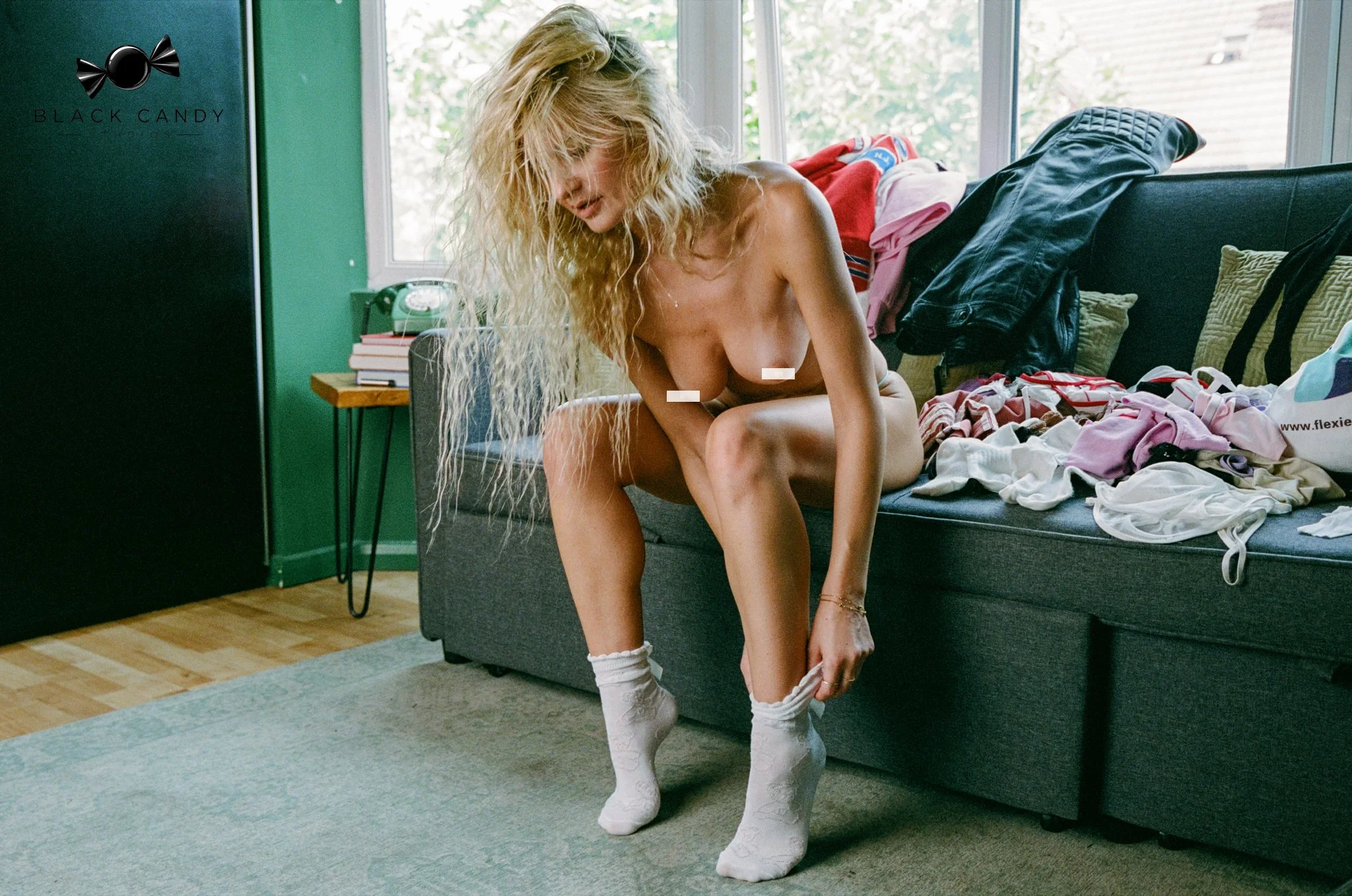
Exploring natural gestures, unposed moments and the creative connection between photographer and model through analogue nude photography.
There is something fascinating about the way our bodies communicate without saying a single word. A simple gesture, the tension in a shoulder, the movement of a hand or the way someone sinks into a sofa can tell a story far more interesting than a perfectly arranged pose. For me, nude photography has never been simply about photographing a naked body. It's about capturing something genuine, whether that's a feeling, a fleeting moment of vulnerability, a subtle expression of sensuality or something that neither the photographer nor the model can quite explain. I have always been drawn to photographs that feel natural and slightly imperfect, images that suggest a story rather than trying to explain everything. Sometimes the most beautiful photographs happen when you stop trying so hard to create them and simply allow things to unfold.
A Messy Sofa and a Little Beautiful Chaos
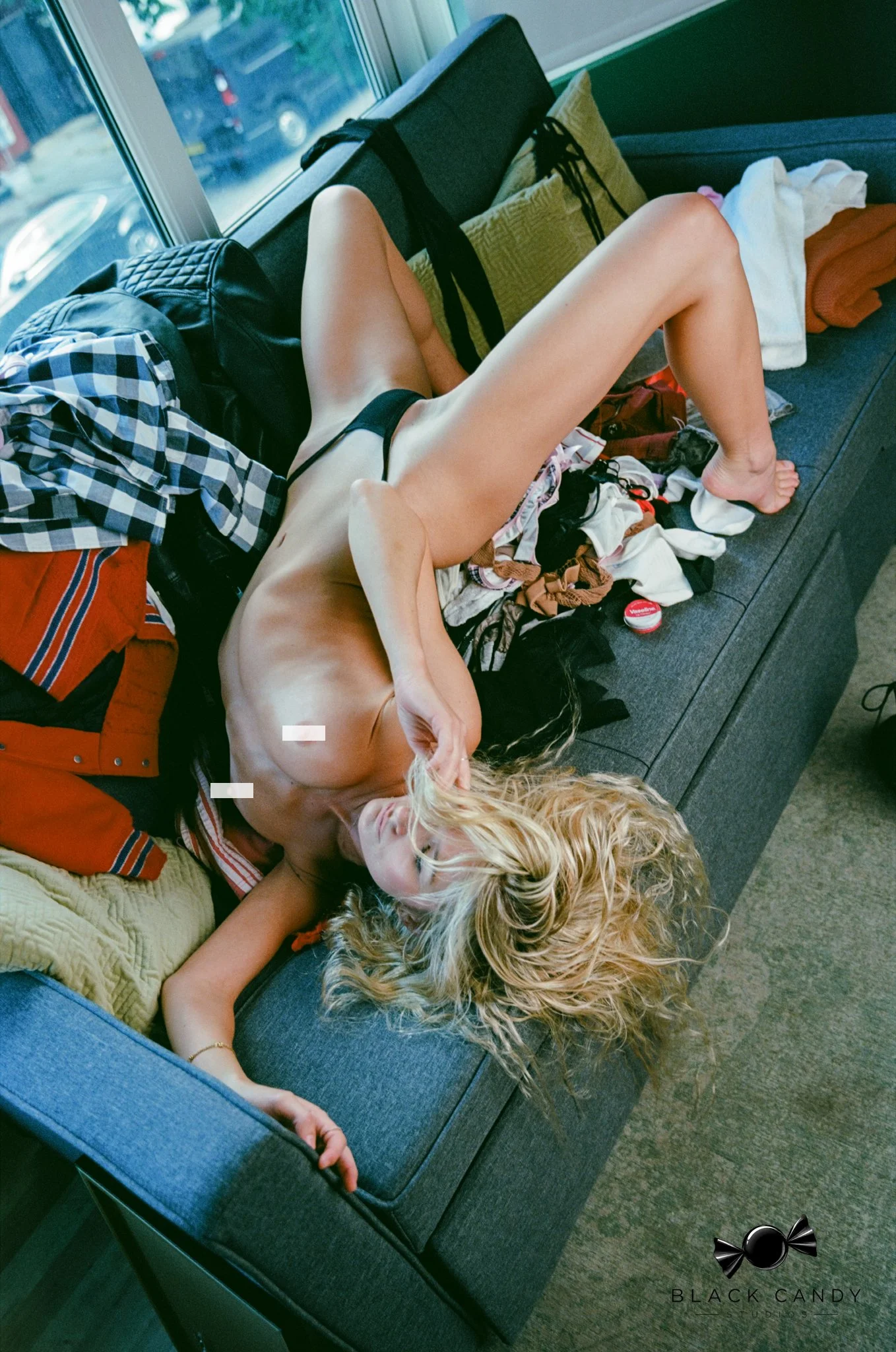
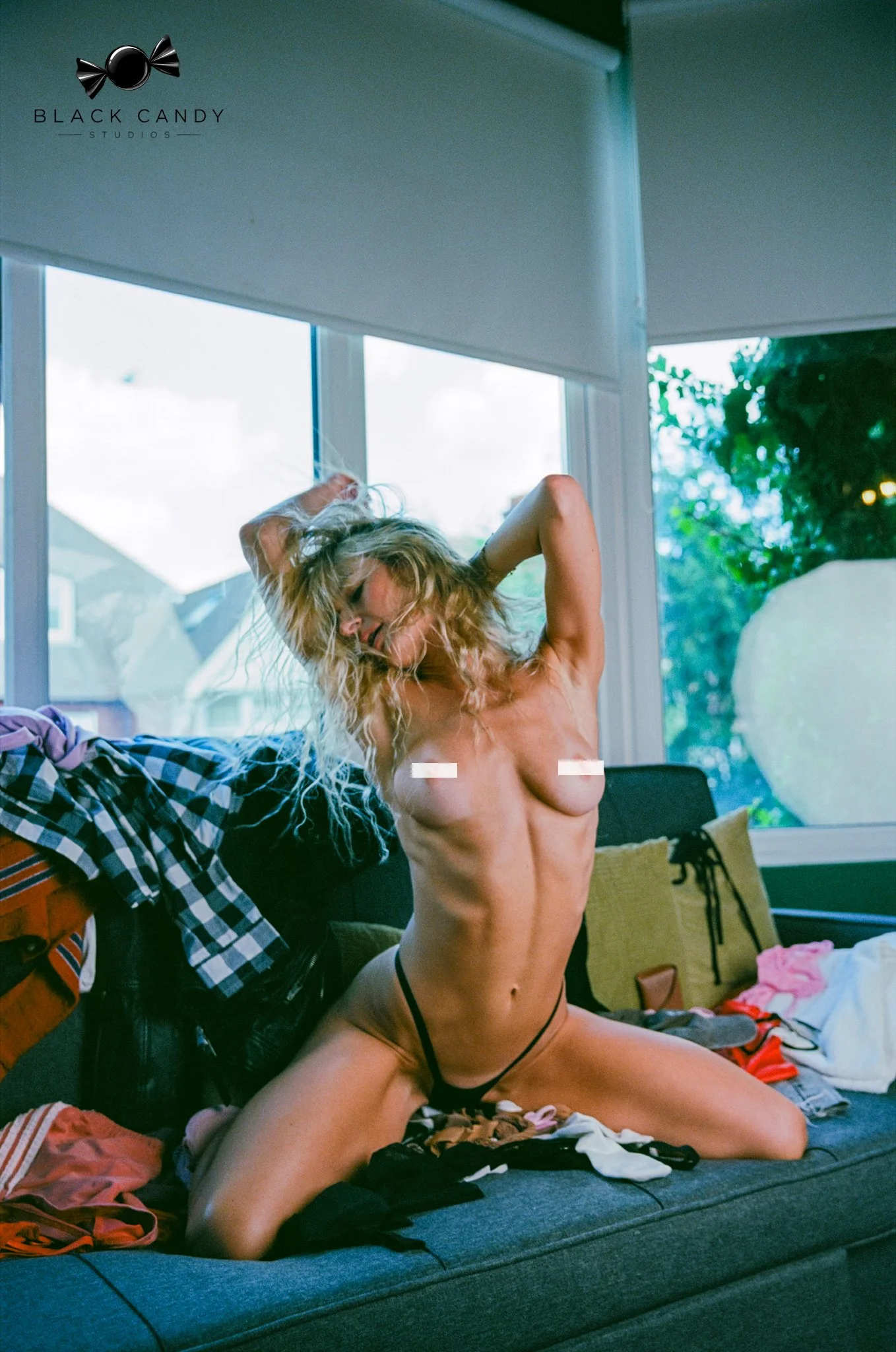
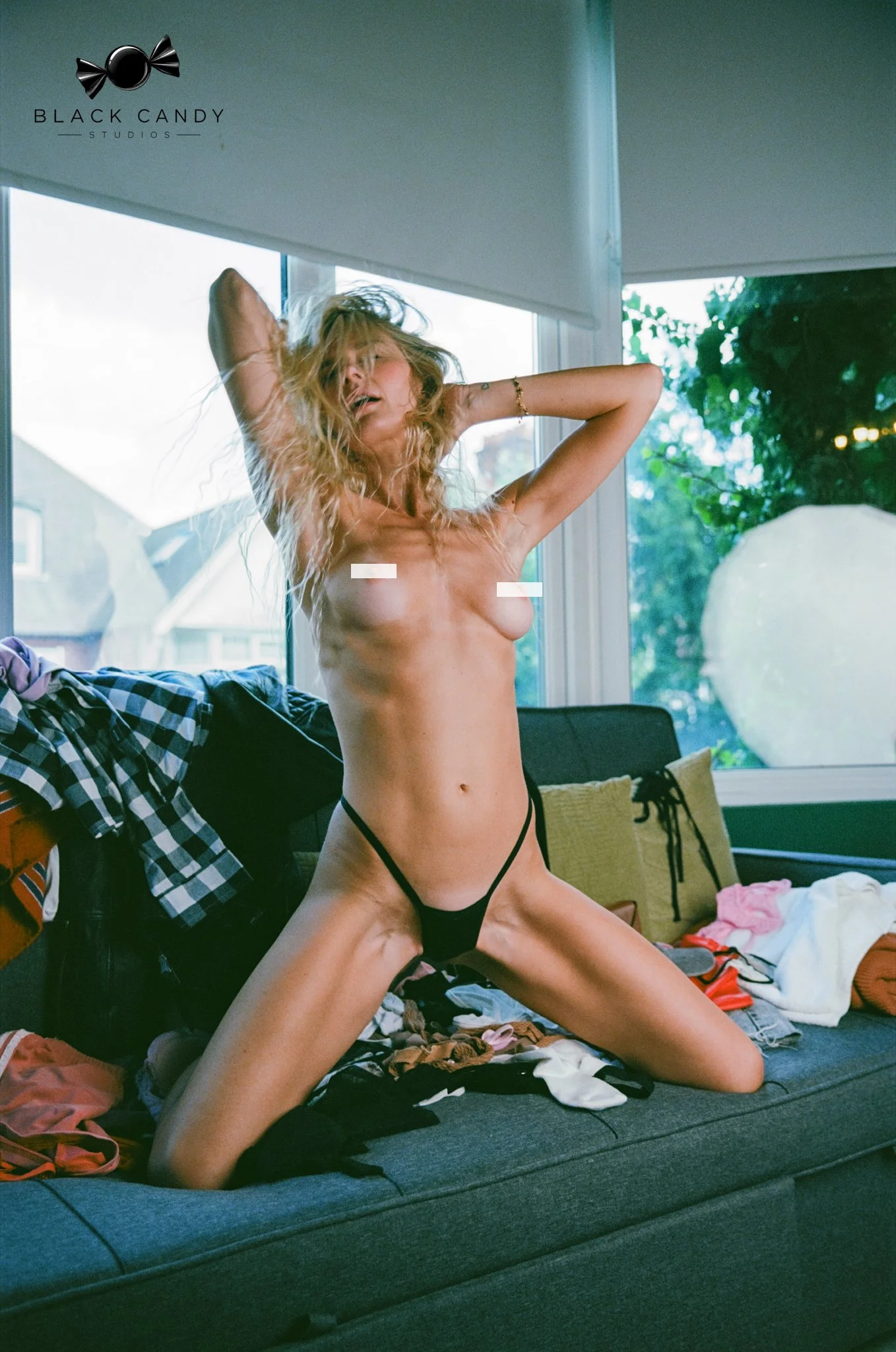
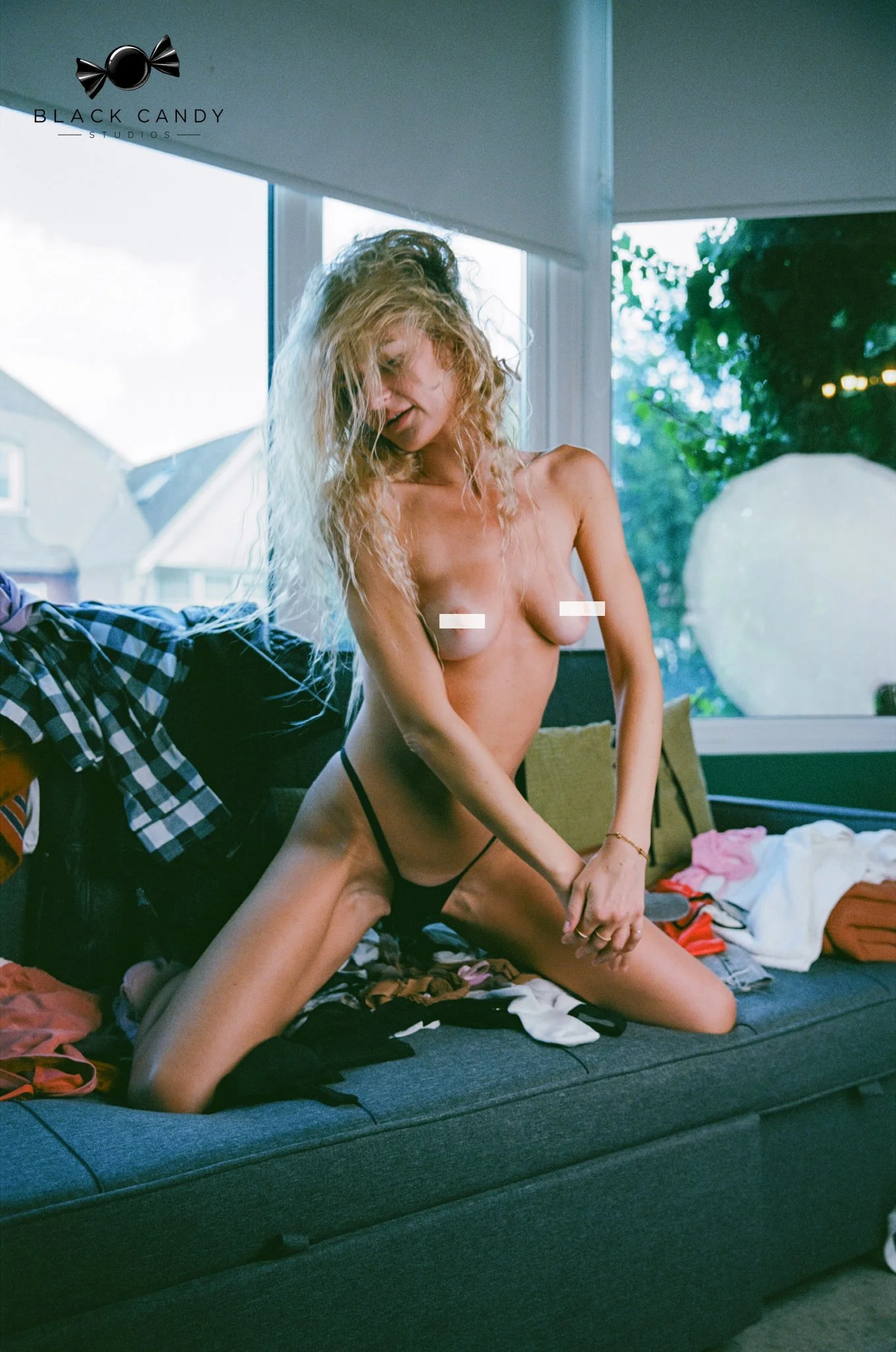
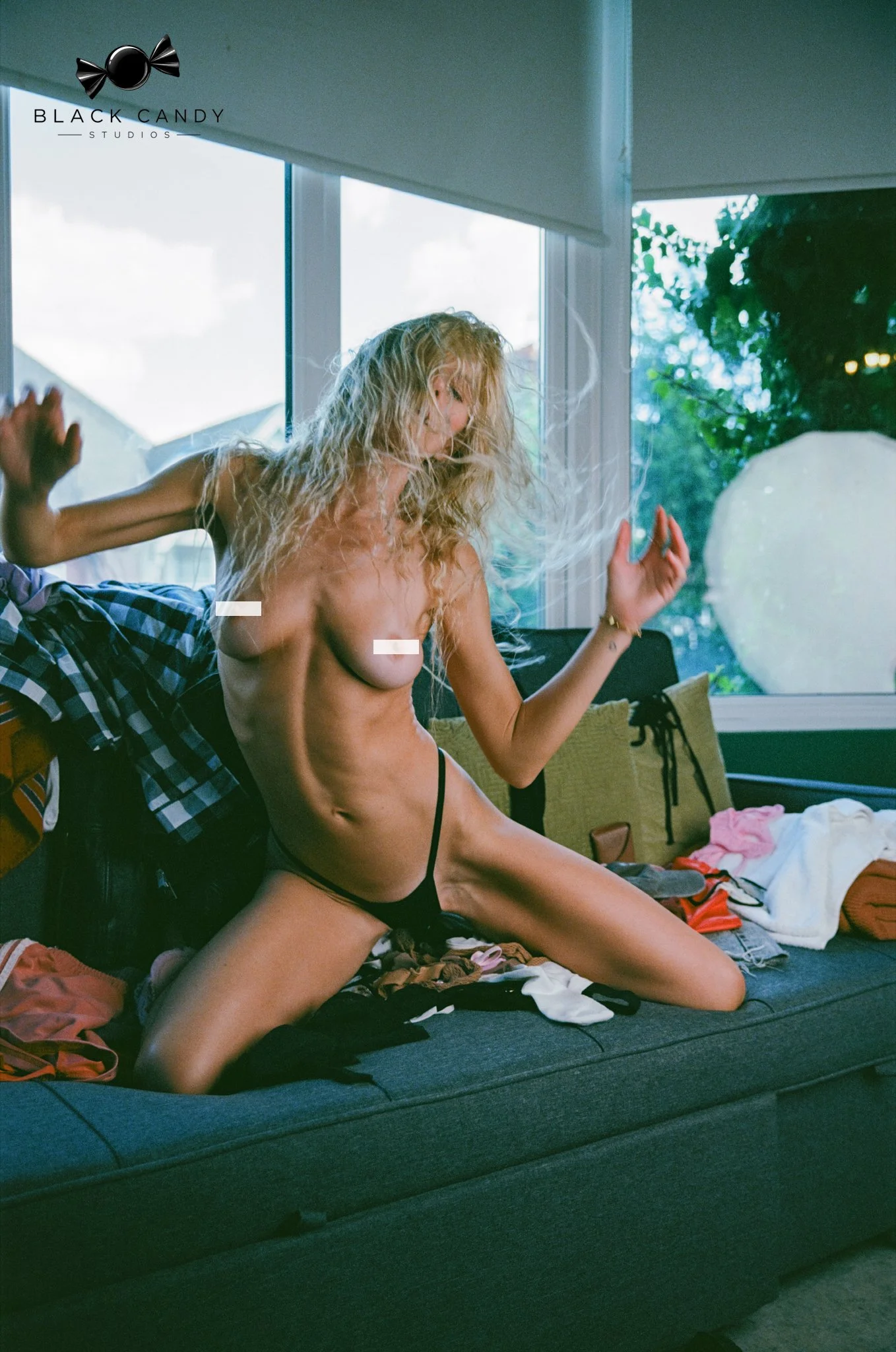
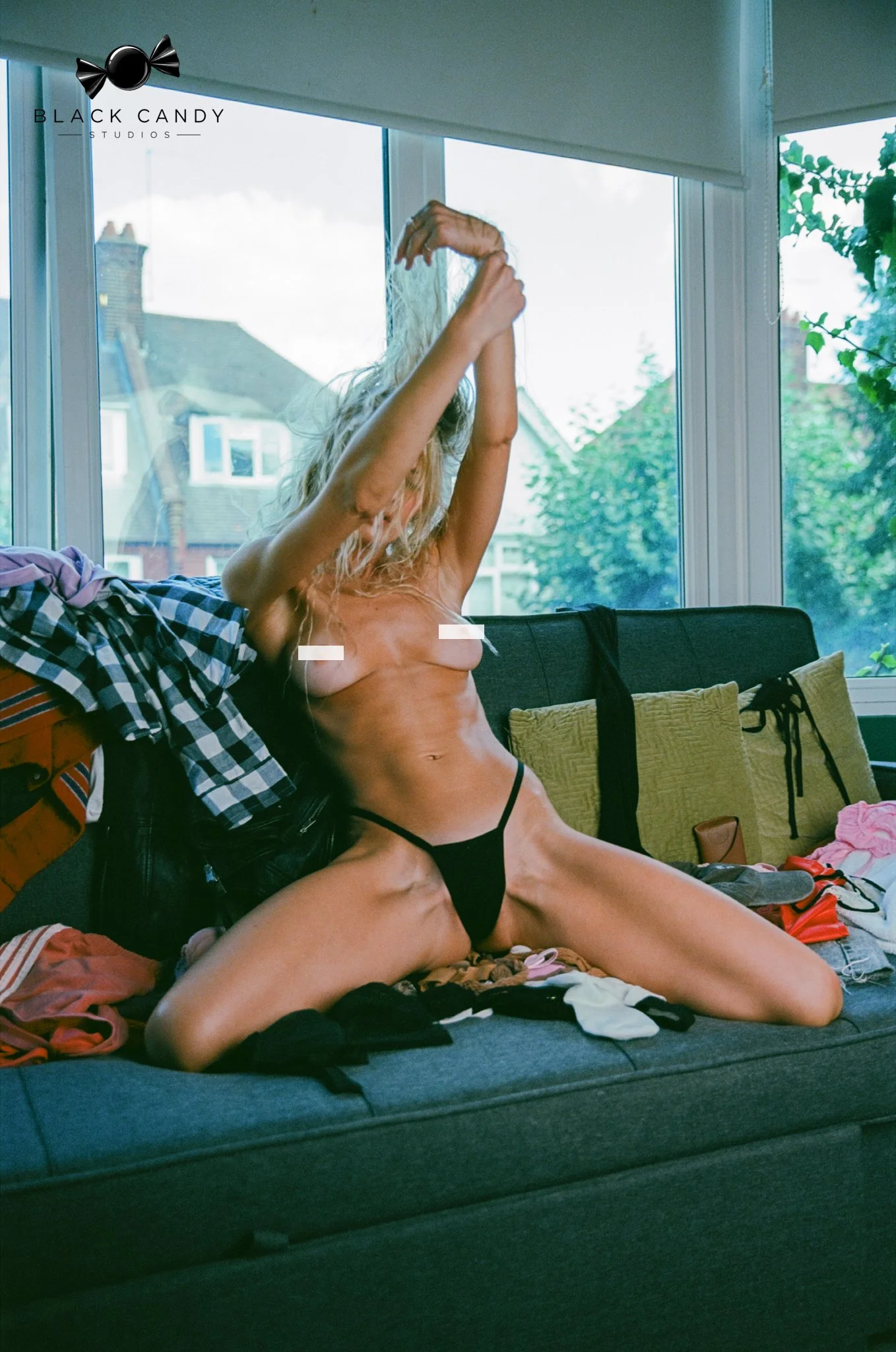
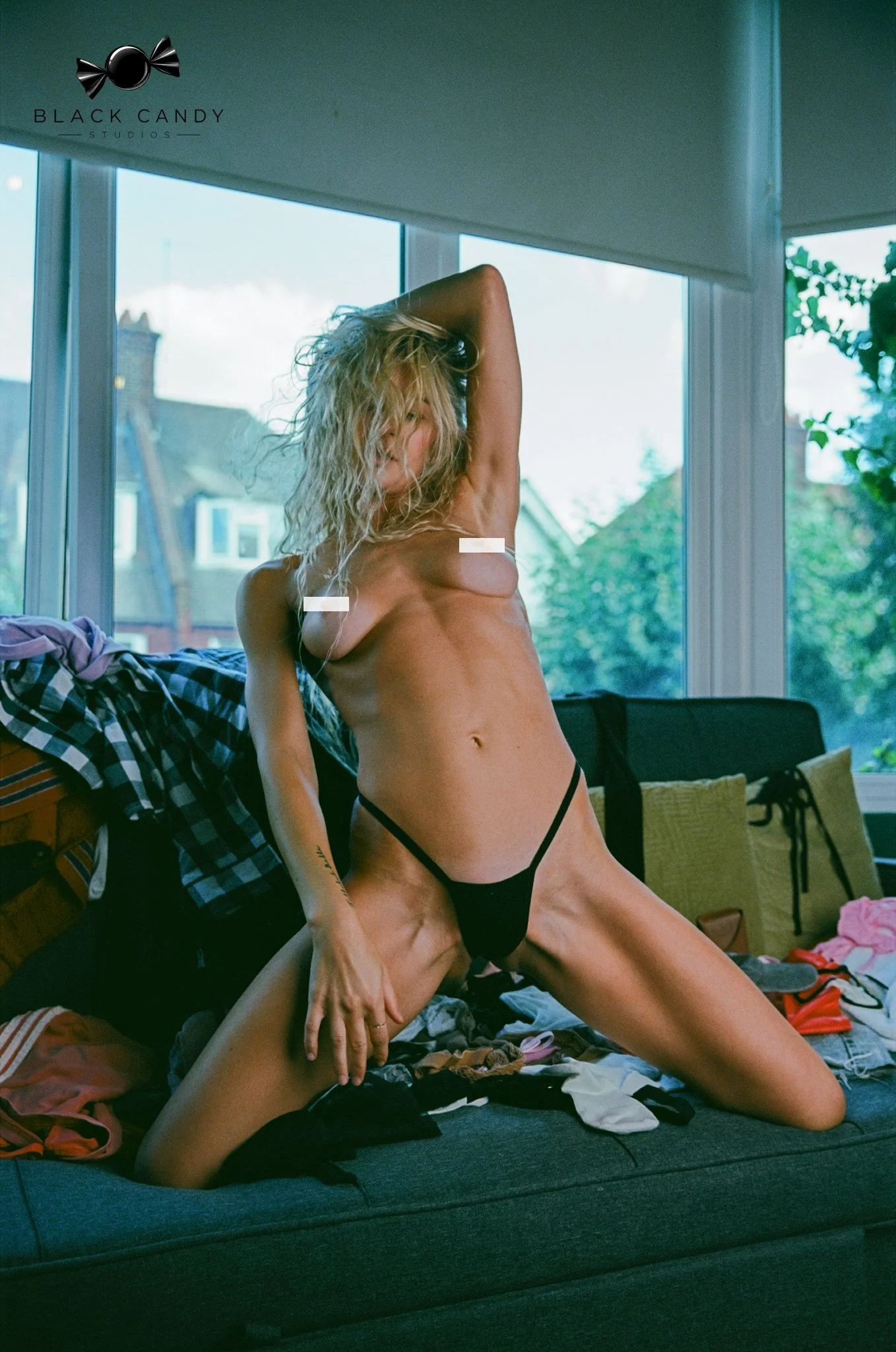
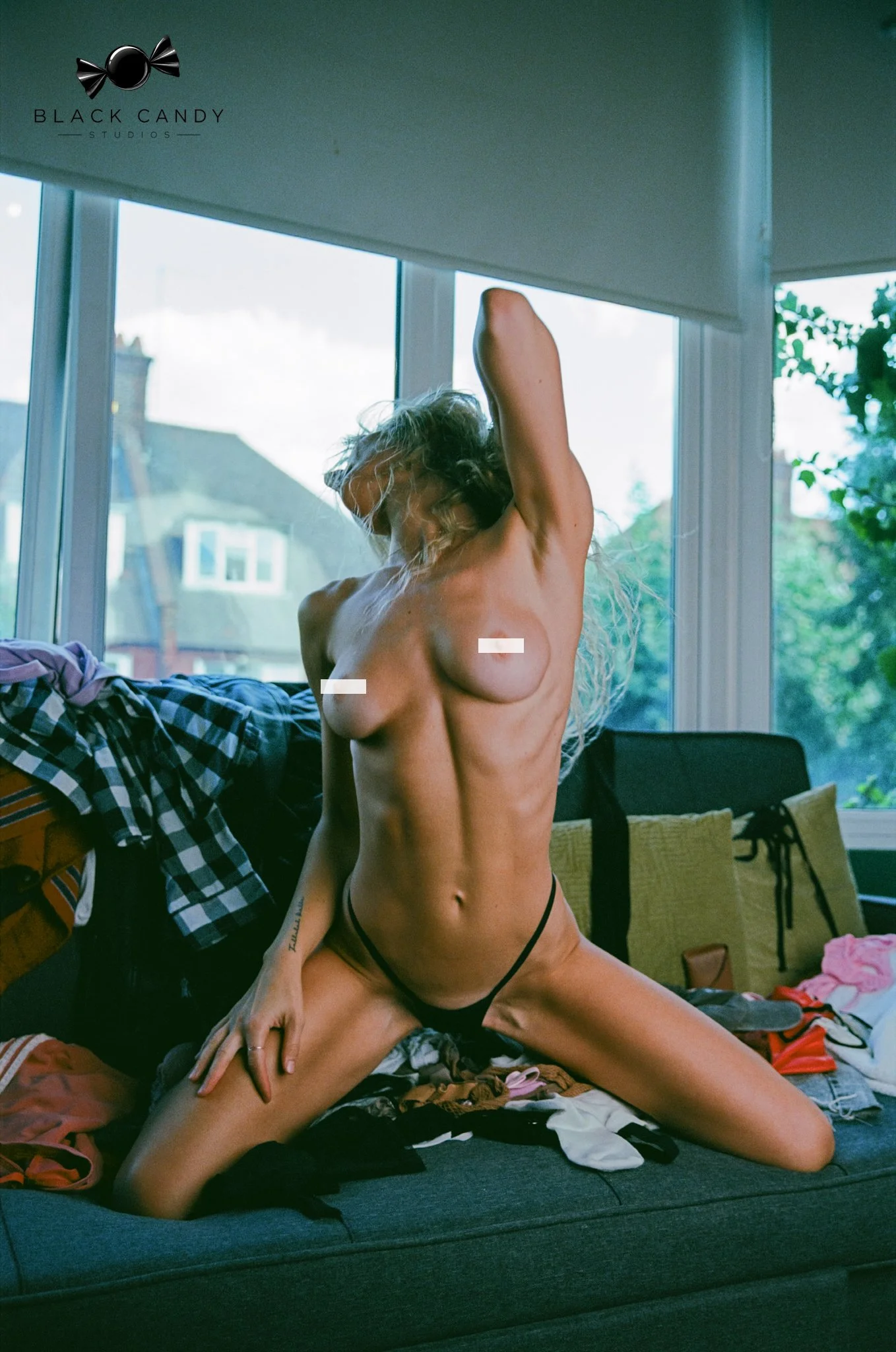
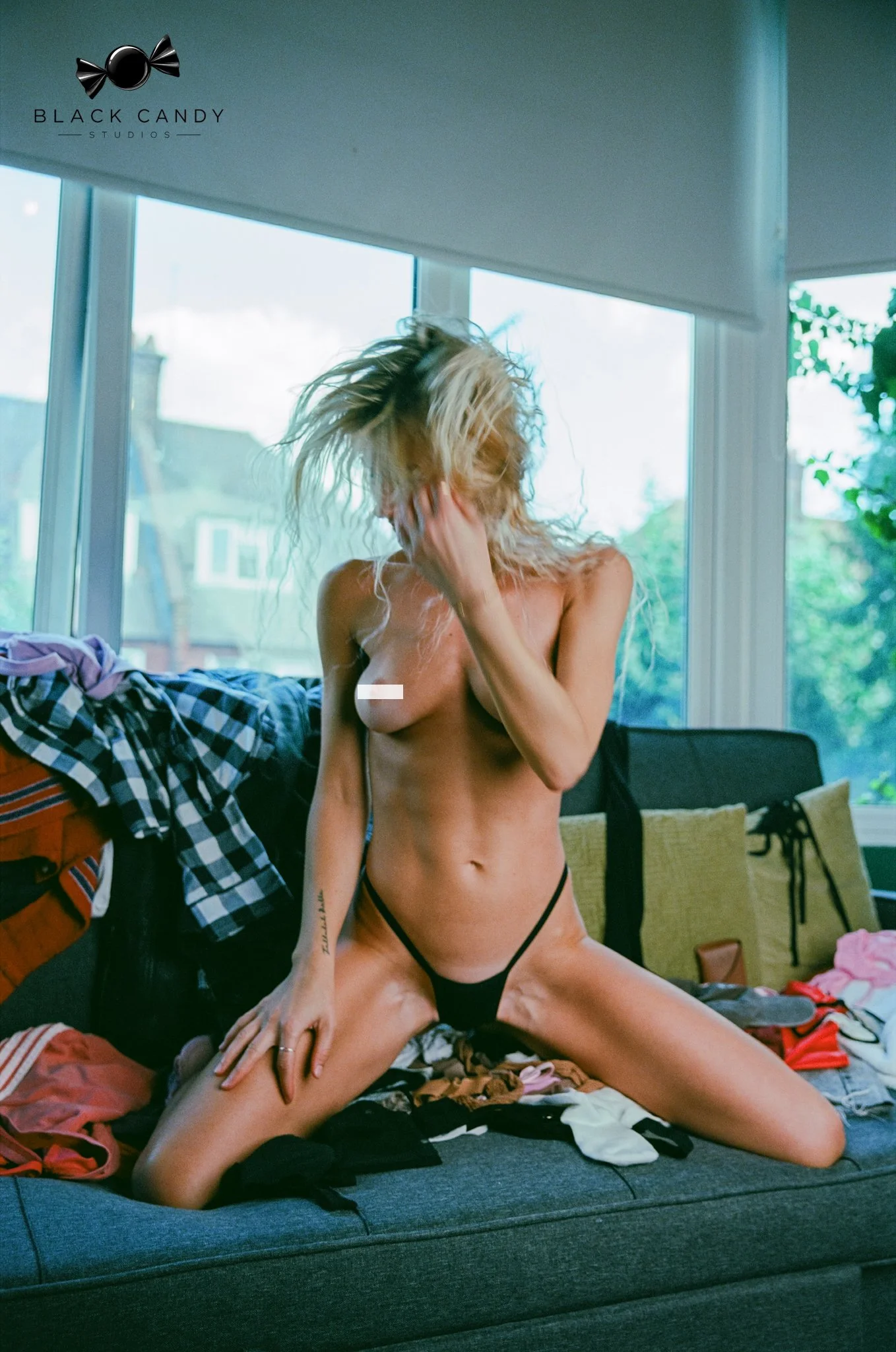
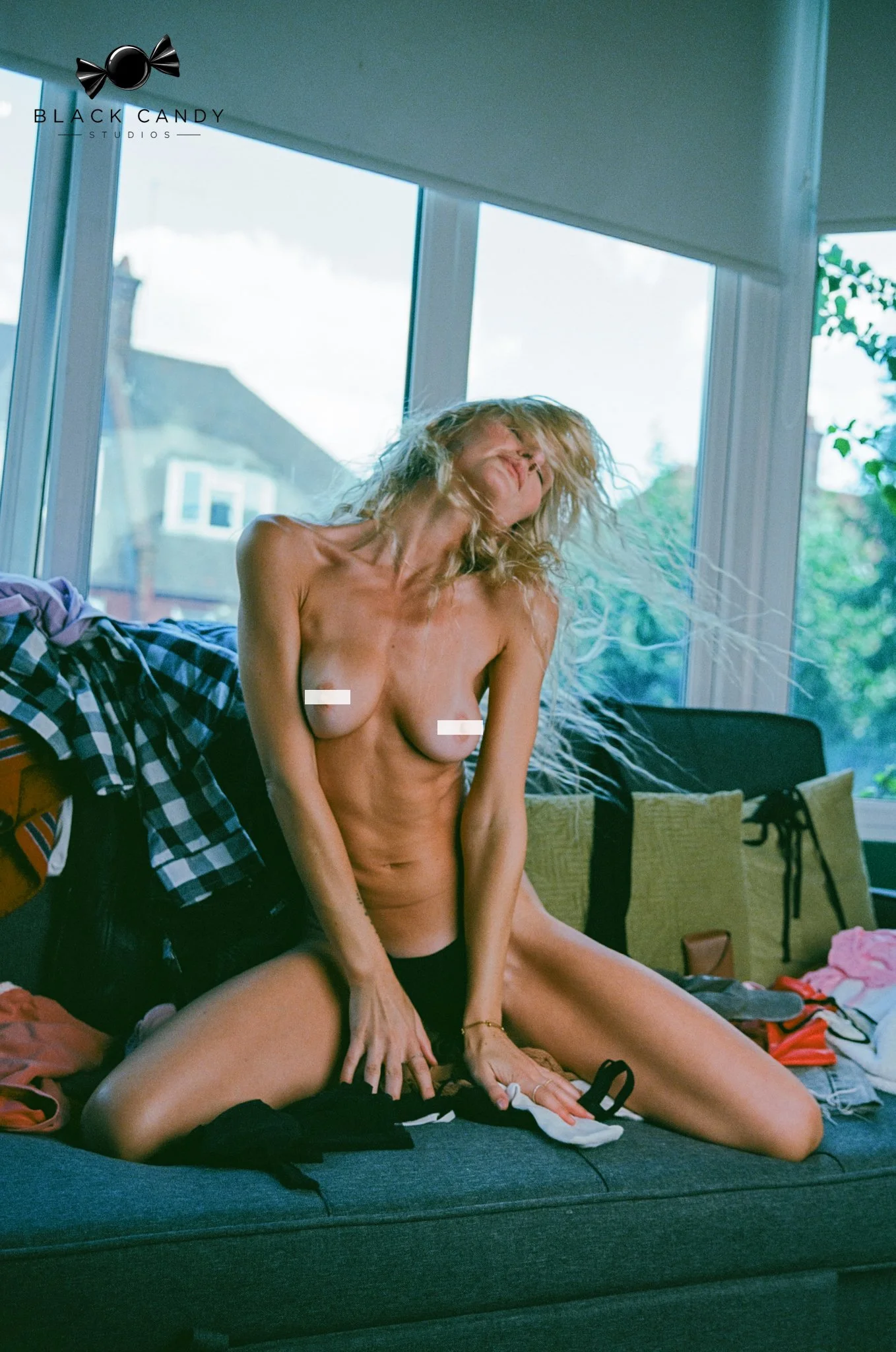
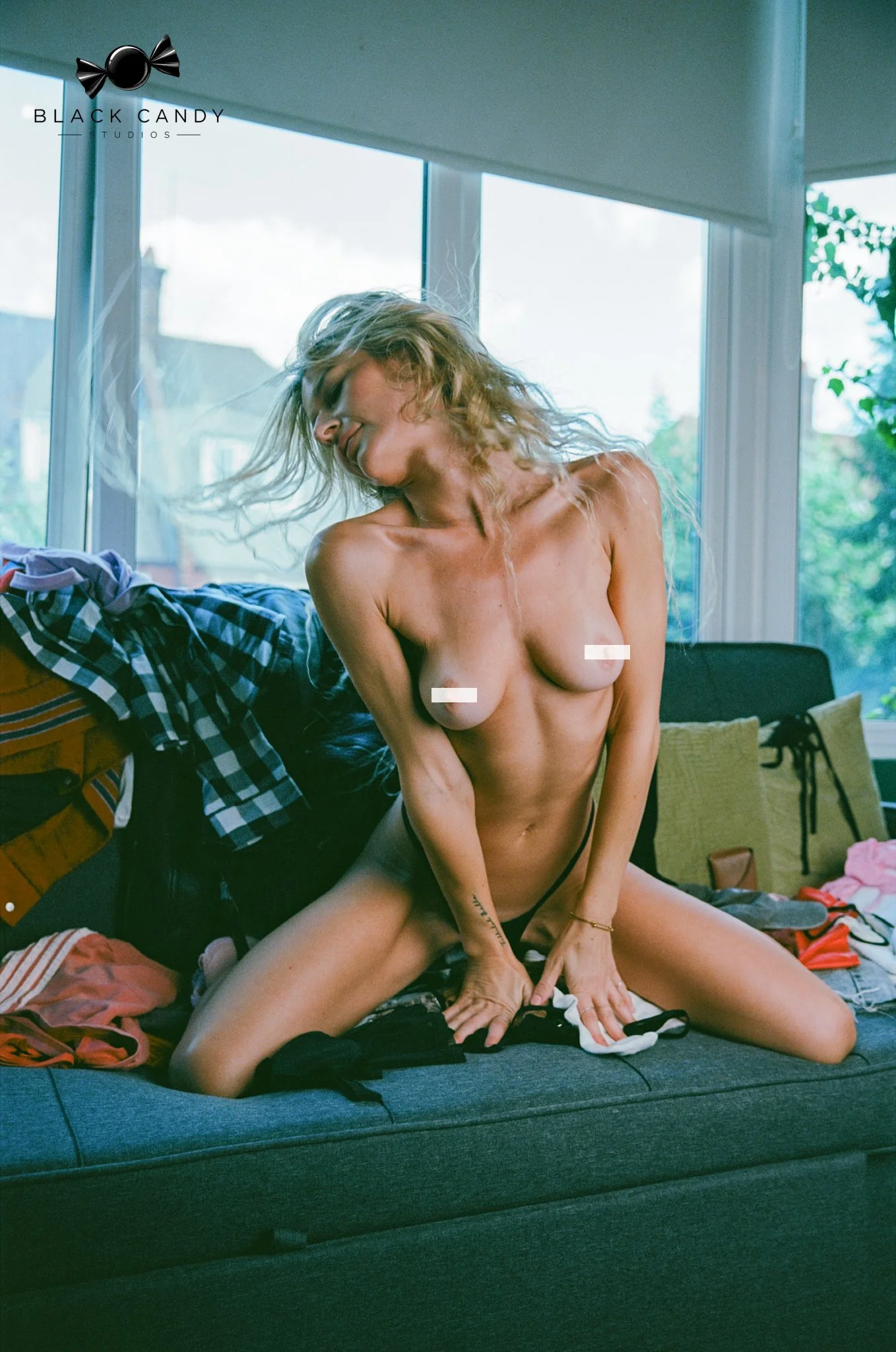
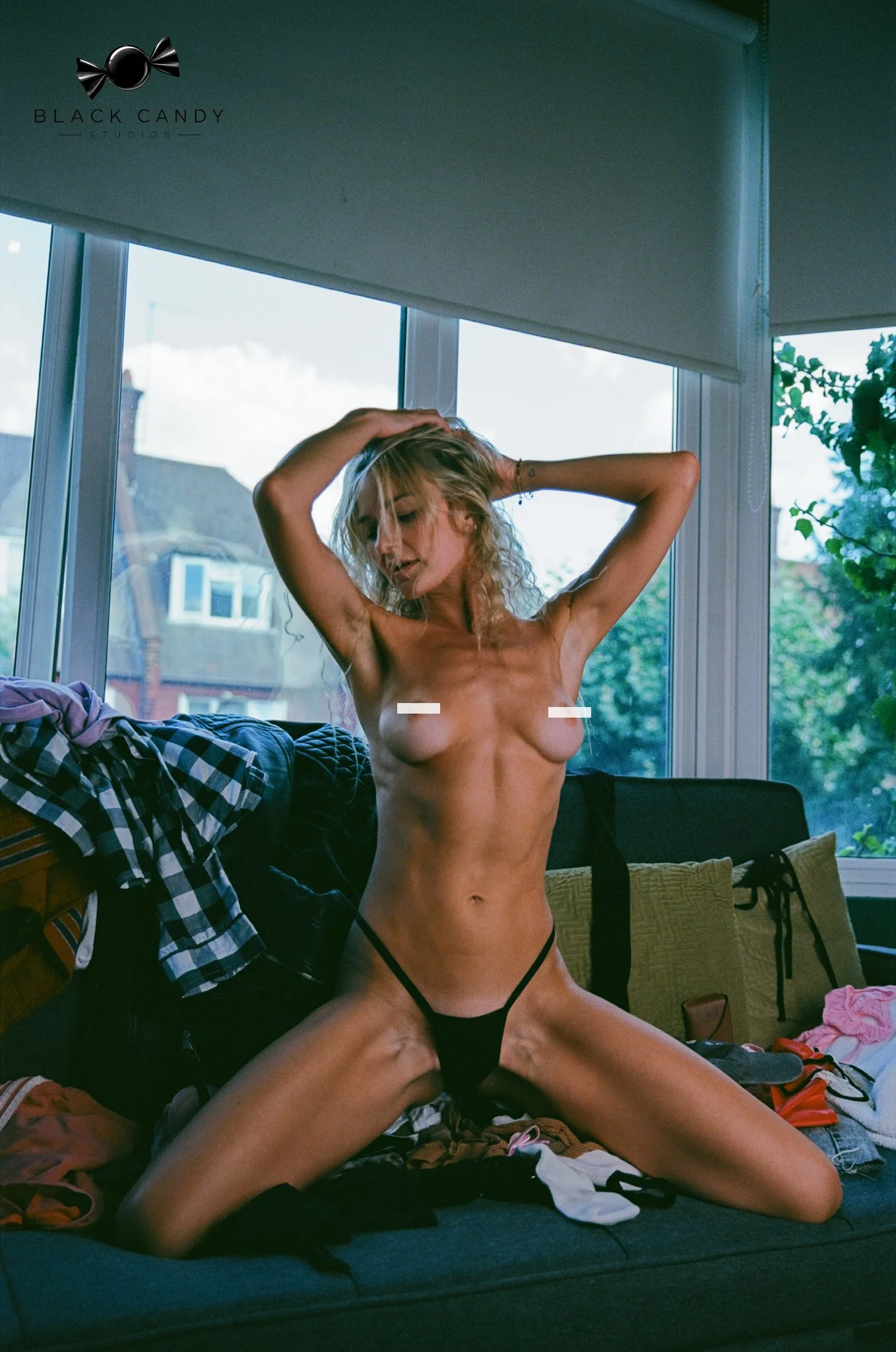
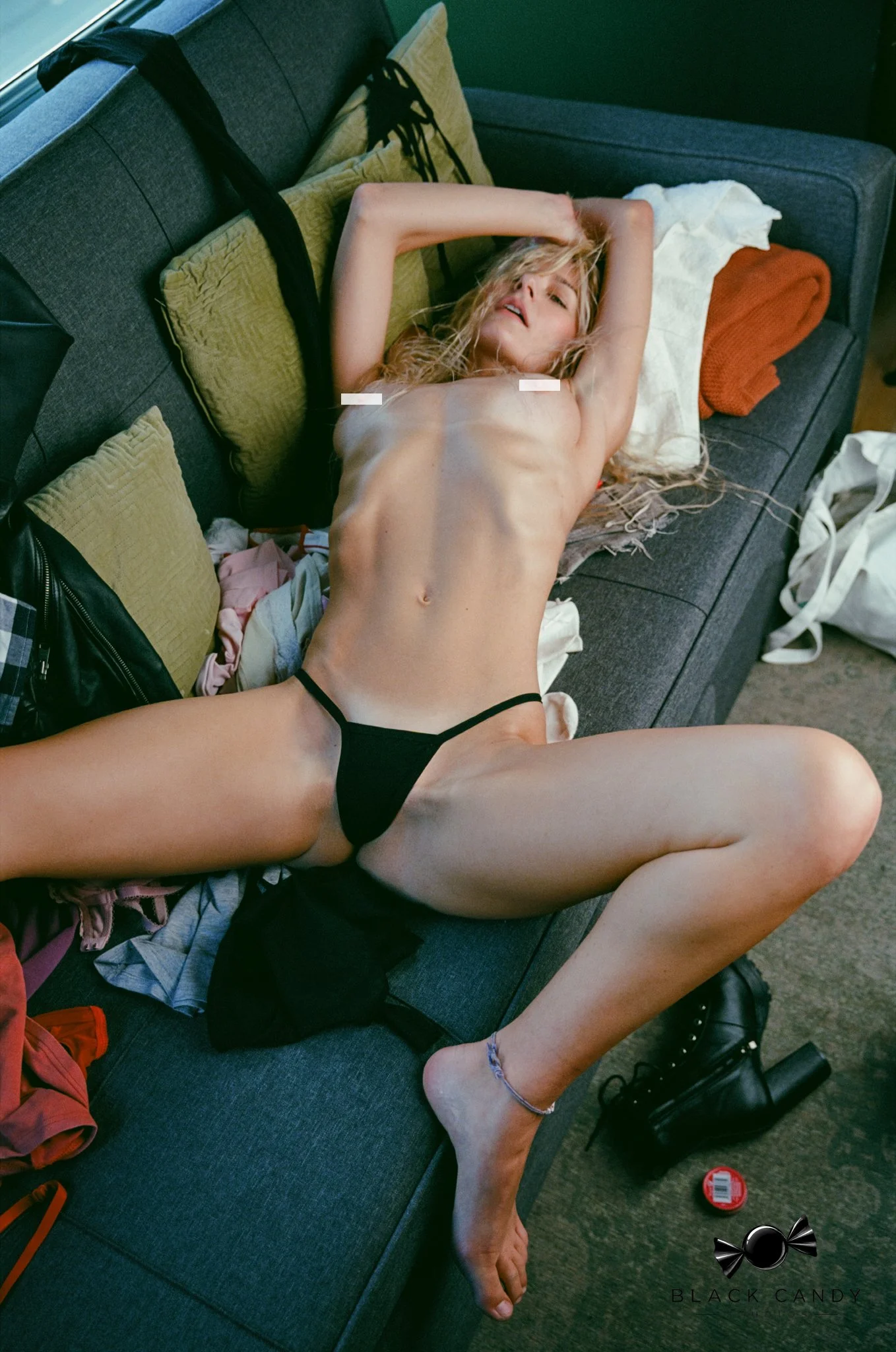
For this particular shoot, I wanted to move away from the polished, carefully arranged environments that we so often see in nude photography. Instead, we worked with something wonderfully ordinary: a messy sofa, clothes casually scattered around and an atmosphere that felt genuinely lived-in rather than deliberately staged. There was something incredibly appealing about the simplicity of it all. The discarded clothes, the creases in the cushions and the slightly chaotic surroundings contributed to a feeling of intimacy and authenticity. I didn't want the scene to look perfect.
Quite the opposite, actually. I wanted the photographs to feel as though we had stumbled upon a private moment, something happening naturally without any particular awareness of the camera. The sofa became much more than just a piece of furniture. It offered endless possibilities for movement and interaction, allowing the model to stretch, curl up, lean backwards or simply relax into the cushions. The scattered clothes added another layer to the visual story, suggesting something that had happened before the photograph was taken and leaving the viewer free to imagine the rest. I find this kind of environment particularly interesting because it removes the formality often associated with studio photography and allows the human body to exist naturally within its surroundings.
Gestures, Tension and the Beauty of Movement
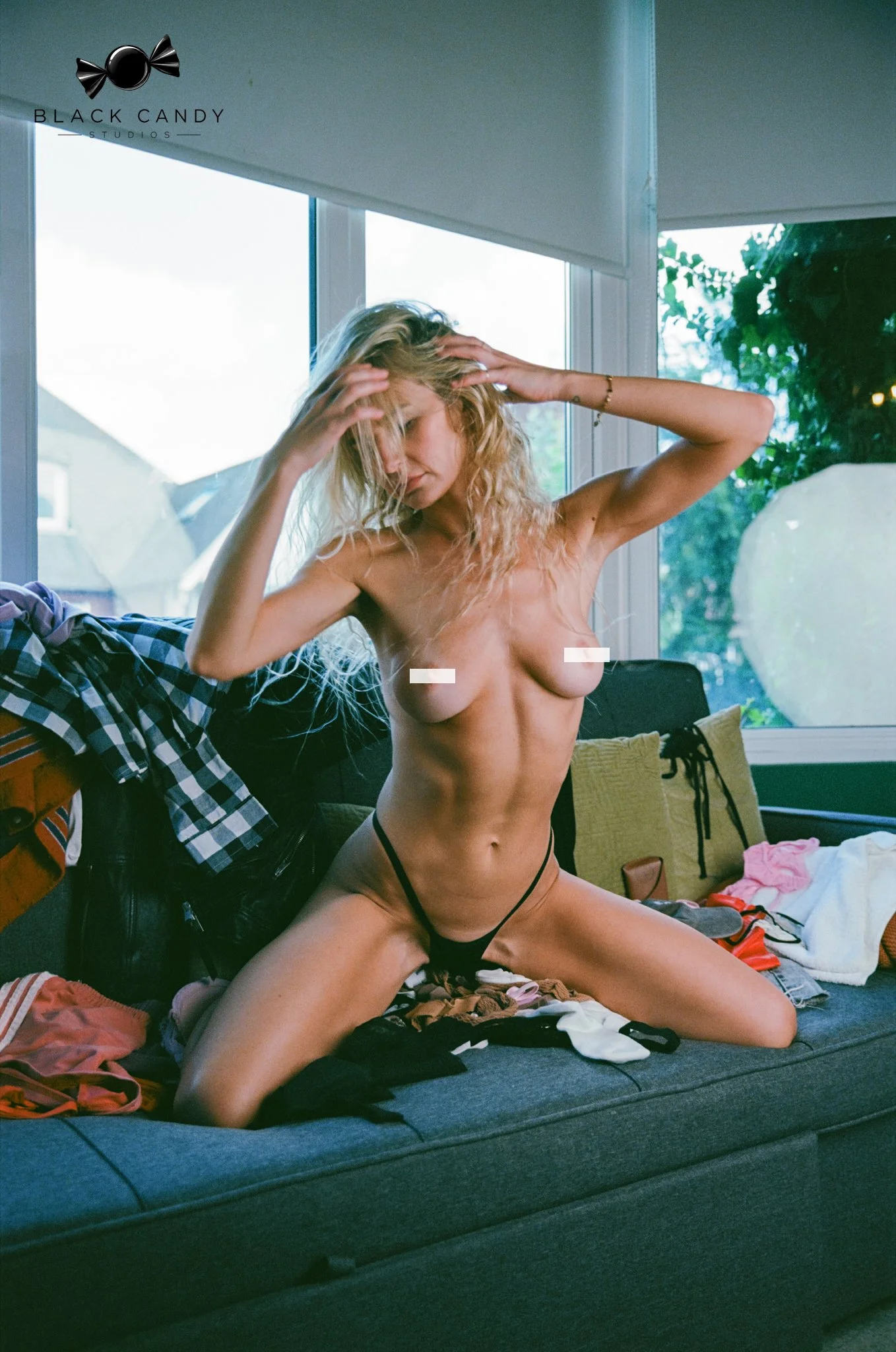
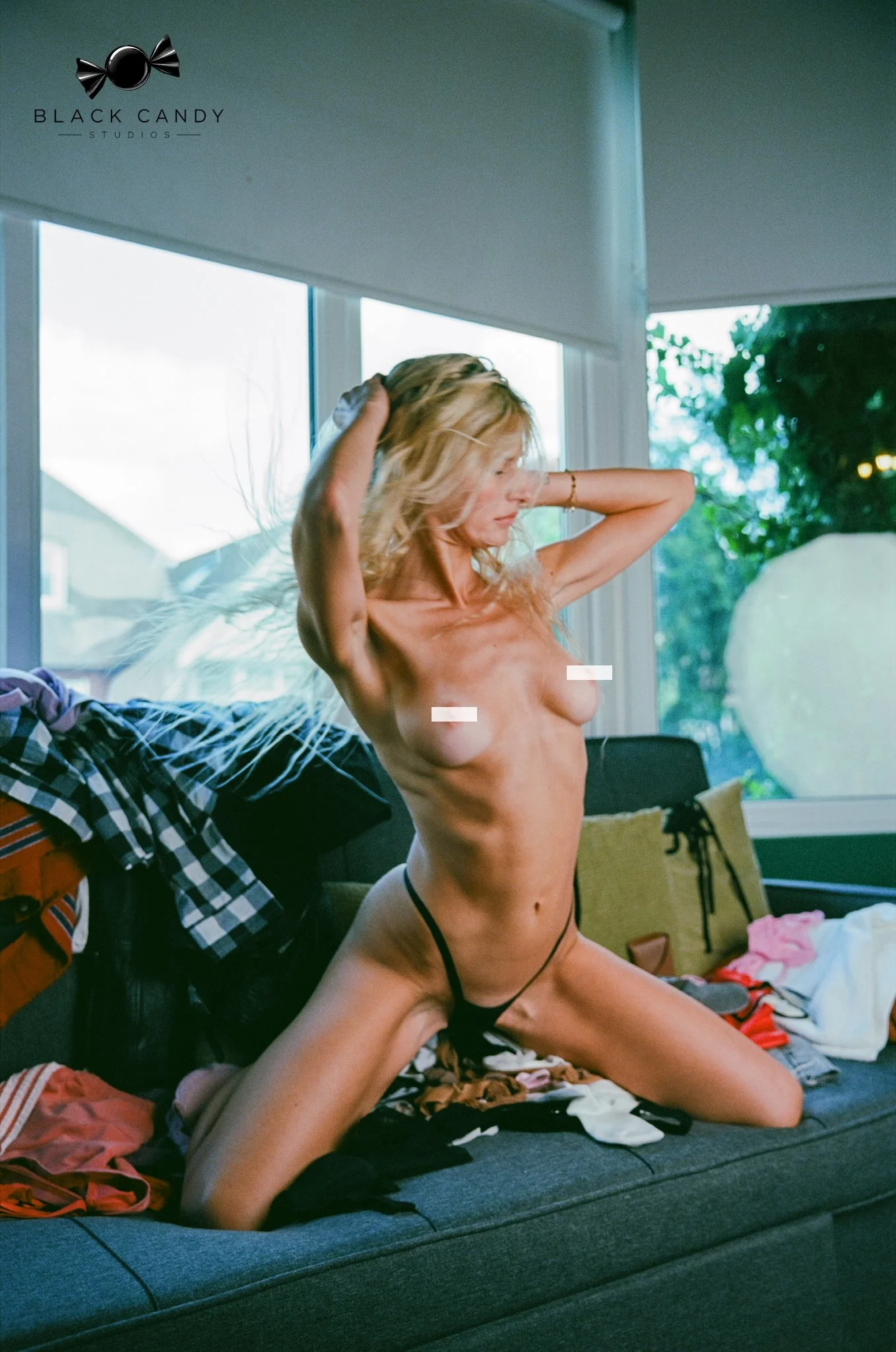
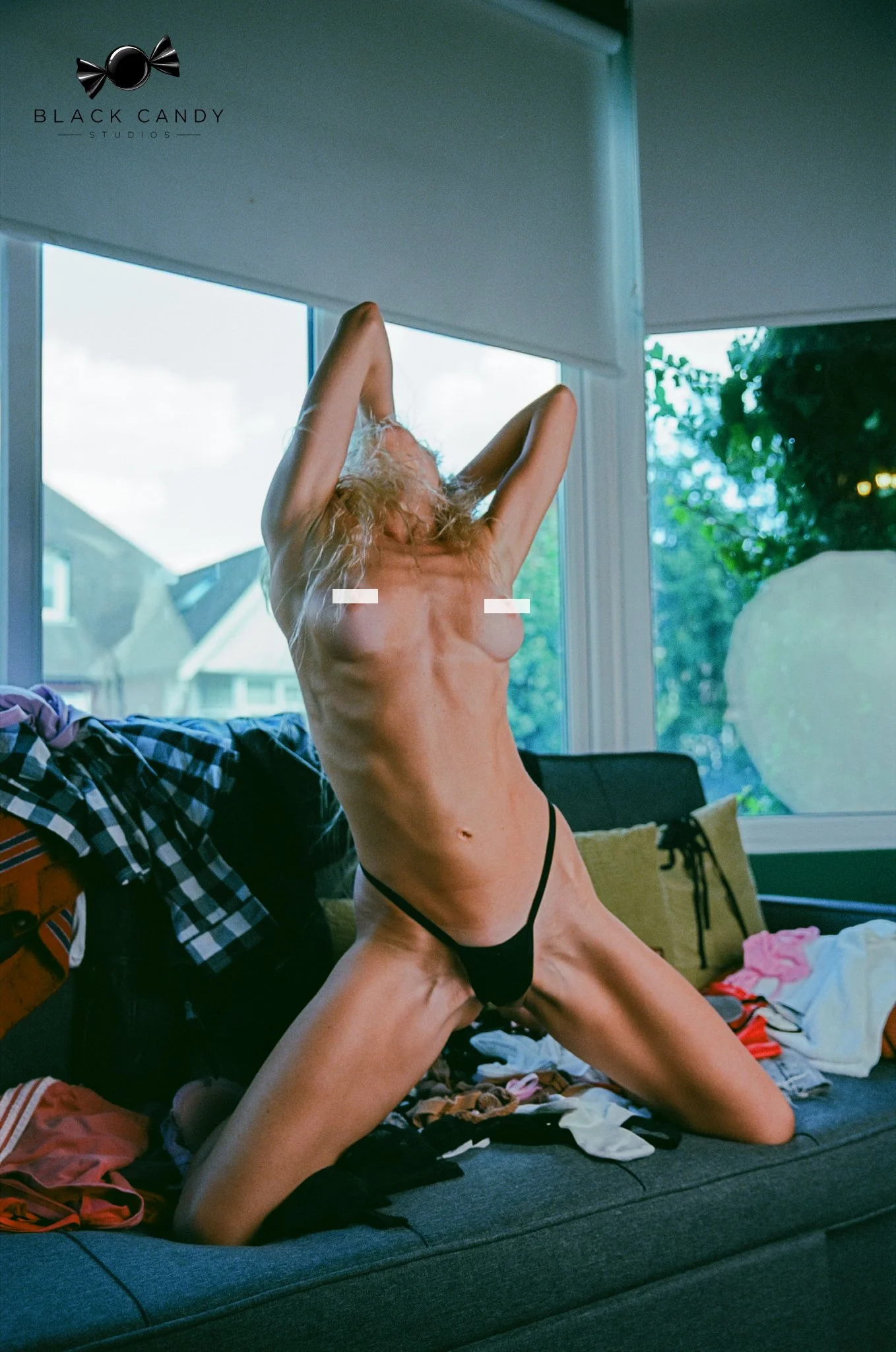
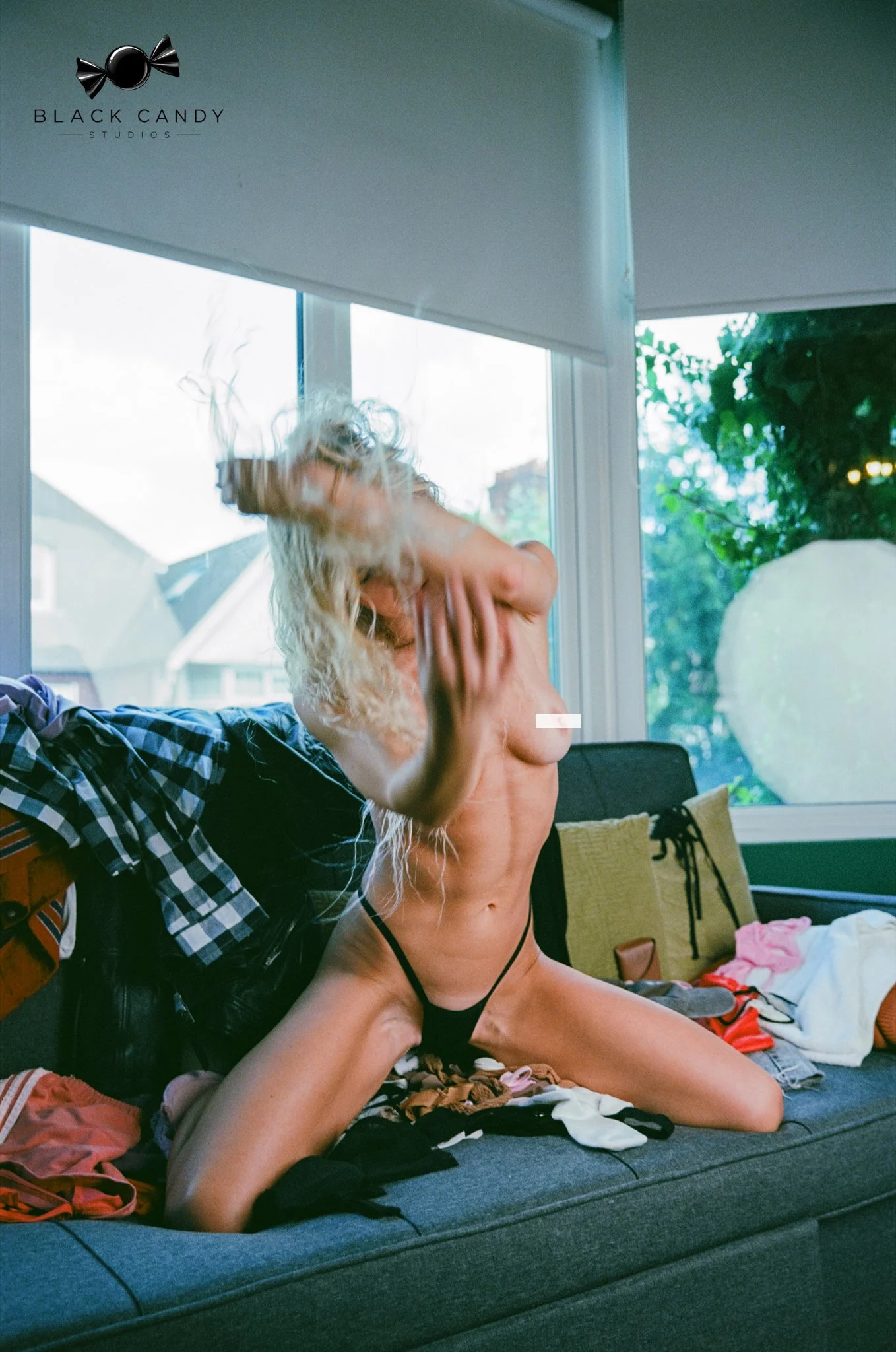
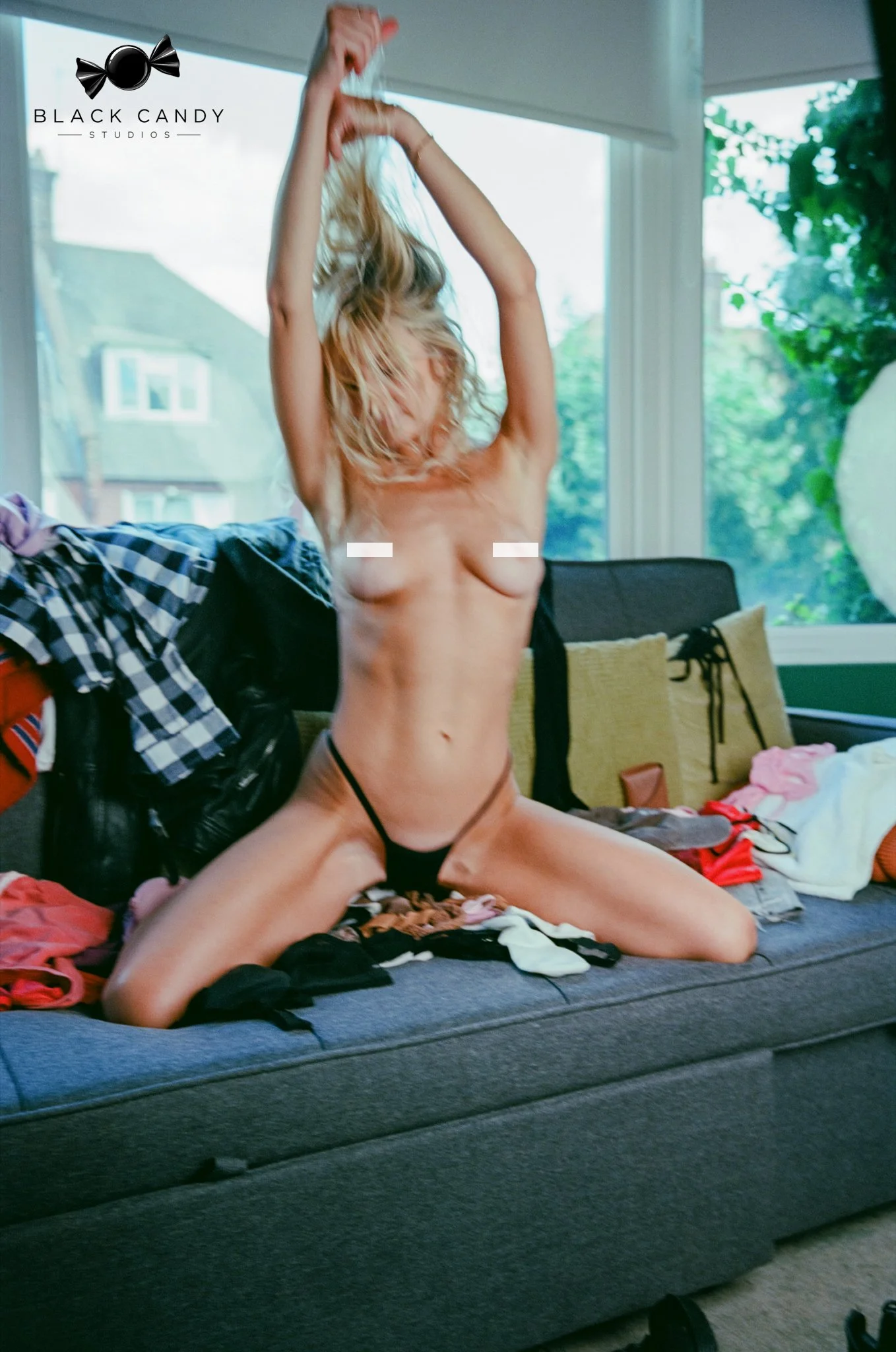
One of the things I find most fascinating about photographing the human body is its incredible ability to communicate emotions through movement, often in ways that no carefully arranged pose could ever achieve. For this particular shoot, I wanted to take that idea a little further and introduce an element of complete spontaneity and controlled chaos. At one point, I deliberately asked the model to forget everything about posing, completely let go of any restraint and simply go crazy with movement and expression. No rules, no carefully considered positions, no worrying about looking beautiful or maintaining a flattering angle. Just pure, uninhibited physical expression. And she performed it absolutely perfectly. What followed was a wonderfully unpredictable few seconds of twisting, stretching, throwing her body around and allowing emotions to translate into movement without hesitation. It was energetic, chaotic, occasionally almost theatrical, but above all incredibly genuine. This was exactly the kind of creative freedom I had hoped for, and watching it unfold was fascinating.
To capture the entire sequence, I switched my Canon EOS-1 RS into continuous shooting mode, taking full advantage of its staggering 10 frames per second on film. There's something rather extraordinary about that kind of speed coming from an analogue camera, particularly when you consider that an entire 36-exposure roll can disappear in less than four seconds. The camera fired away as she moved, recording tiny fractions of time that would have been almost impossible to anticipate individually. Every frame captured a slightly different gesture, a new tension in the muscles, an unexpected shape or a fleeting expression. What I particularly love about this approach is that neither of us could fully predict the results. She surrendered herself completely to the movement, while I surrendered some of my usual control over the exact moment of exposure. In those few crazy seconds, photography became less about constructing a beautiful image and more about discovering one within the chaos. And to me, that's where some of the most exciting creativity happens.
The Character of Kodak Portra 400
Portra 400 has become one of my favourite films for photographing people, and this session reminded me exactly why. I love its gentle colours, beautiful rendering of skin tones and subtle grain, which gives photographs a distinctive analogue character without overwhelming the image. For a setting like this, with soft textures, scattered clothing and natural body shapes, Portra felt like the perfect choice. It has a wonderful way of rendering skin without making everything look overly polished or clinical, and I particularly appreciate the way it handles the transitions between light and shadow. The colours feel organic, the highlights have a lovely softness when exposed carefully, and the overall result has a warmth that I find difficult to reproduce convincingly with digital photography.
I also think that the character of film complements the slightly imperfect nature of this particular shoot. A little movement blur, an unexpected shadow or a frame that isn't quite as technically precise as intended can sometimes add something interesting to the photograph. Of course, I still care about getting the exposure and focus right, but I don't believe that technical perfection should always be the ultimate goal. Sometimes a photograph with a little imperfection can communicate far more emotion than one that is flawlessly executed but somehow lacks life.
When Photographer and Model Share the Same Vision
Perhaps the most rewarding part of this shoot had very little to do with the camera, the film or even the location. It was the creative connection with the model. I genuinely believe that some of the strongest photographs come from working with someone who understands what you're trying to achieve, sometimes without needing much explanation at all. We were incredibly fortunate to share the same artistic vision, and that made the entire session feel wonderfully natural. There was a mutual understanding of the atmosphere we wanted to create, the movements we were interested in exploring and the kind of emotions we hoped the photographs would communicate.
Rather than me constantly directing every position, the shoot developed into a genuine creative exchange. One gesture would inspire another, a spontaneous movement would suggest a new composition, and sometimes the model would introduce an idea that took the photographs somewhere I hadn't originally imagined. I particularly enjoy this kind of collaboration because it allows the model to become an active participant in the creative process rather than simply someone following instructions. When both people feel comfortable sharing ideas, experimenting and trusting each other's instincts, the whole experience becomes much more rewarding. There's also a certain energy that develops when you realise you're both seeing the same possibilities in a scene. You don't need to explain every little detail because the creative understanding is already there, and I think that connection often becomes visible in the photographs themselves.
Finding Beauty in the Unplanned
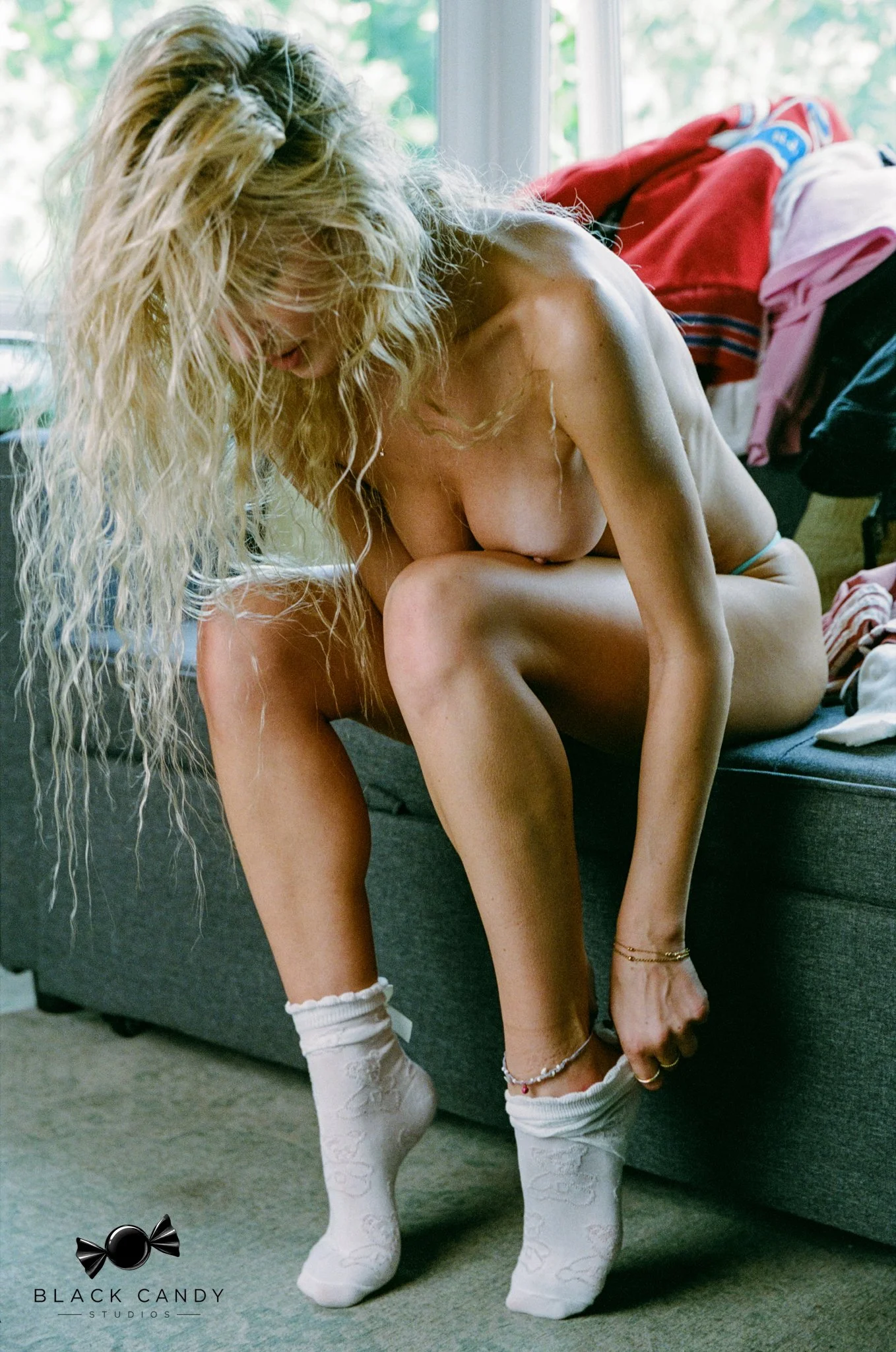
Looking back at this shoot, what I appreciate most is how little we actually needed to create an interesting visual story. A sofa, some scattered clothes, a roll of Portra 400, natural gestures and two people sharing the same creative vision were enough to offer an almost endless variety of photographic possibilities. I think that's an important reminder, particularly in a world where photography can sometimes become overly focused on expensive equipment, elaborate lighting setups and perfectly styled locations. Of course, technical knowledge matters, and understanding light, composition, exposure and timing is essential if you want to develop your skills as a photographer.
But technique alone doesn't necessarily create an emotionally engaging image. You also need curiosity, sensitivity and a willingness to recognise beauty in things that might otherwise go unnoticed. A slightly awkward gesture, a moment of hesitation, the way a body naturally rests against an untidy sofa or the tension created by an unexpected movement can all become the most interesting part of a photograph. I find that the less I try to control every detail, the more opportunities I discover. This doesn't mean abandoning direction or planning altogether, but rather creating enough freedom within the shoot for something spontaneous to happen. Some of my favourite photographic moments have come from ideas that weren't planned in advance, and that's one of the reasons I continue to enjoy this kind of work so much.
Final Thoughts
For me, artistic nude photography is ultimately about much more than the human body itself. It's about the language that body speaks through gestures, movement, tension, softness and all those subtle emotions that exist somewhere between them. This shoot was a lovely reminder of why I enjoy working with analogue photography and collaborating with models who share my enthusiasm for exploring the human form creatively. There was no need for elaborate staging, complicated concepts or an endless collection of props. Just a relaxed atmosphere, a beautifully imperfect setting, a trusted film camera and the freedom to experiment. I came away from the session feeling that we had created something personal and genuine, not because every photograph was carefully planned, but because we allowed ourselves to explore ideas naturally and respond to whatever felt interesting in the moment. That's the kind of photography I find most rewarding, and it's something I hope to continue developing in my work. After all, the most interesting thing about the human body isn't simply how it looks, but how much it can say without speaking at all.
