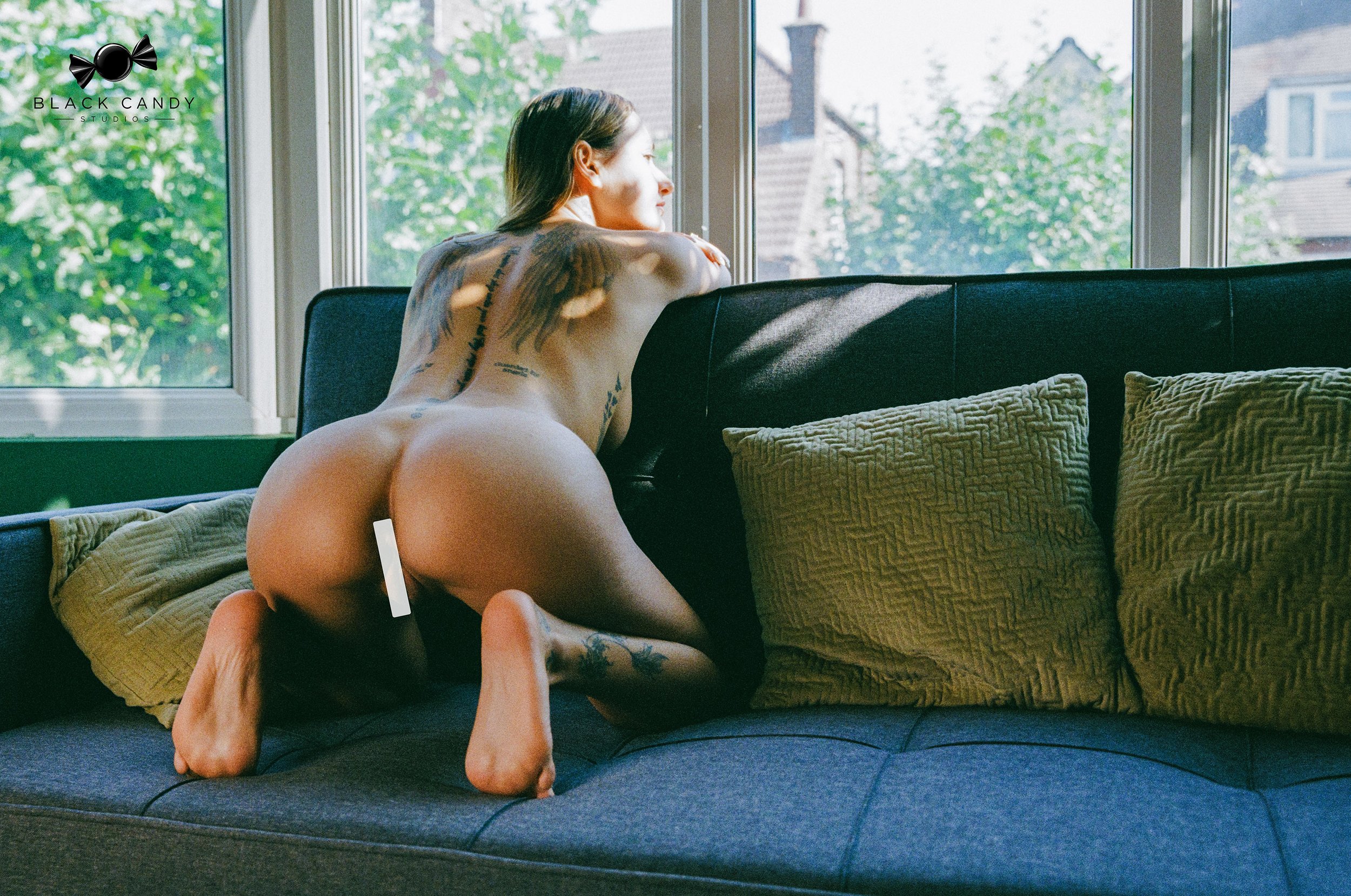
Painting With Natural Light — A Morning on Film.
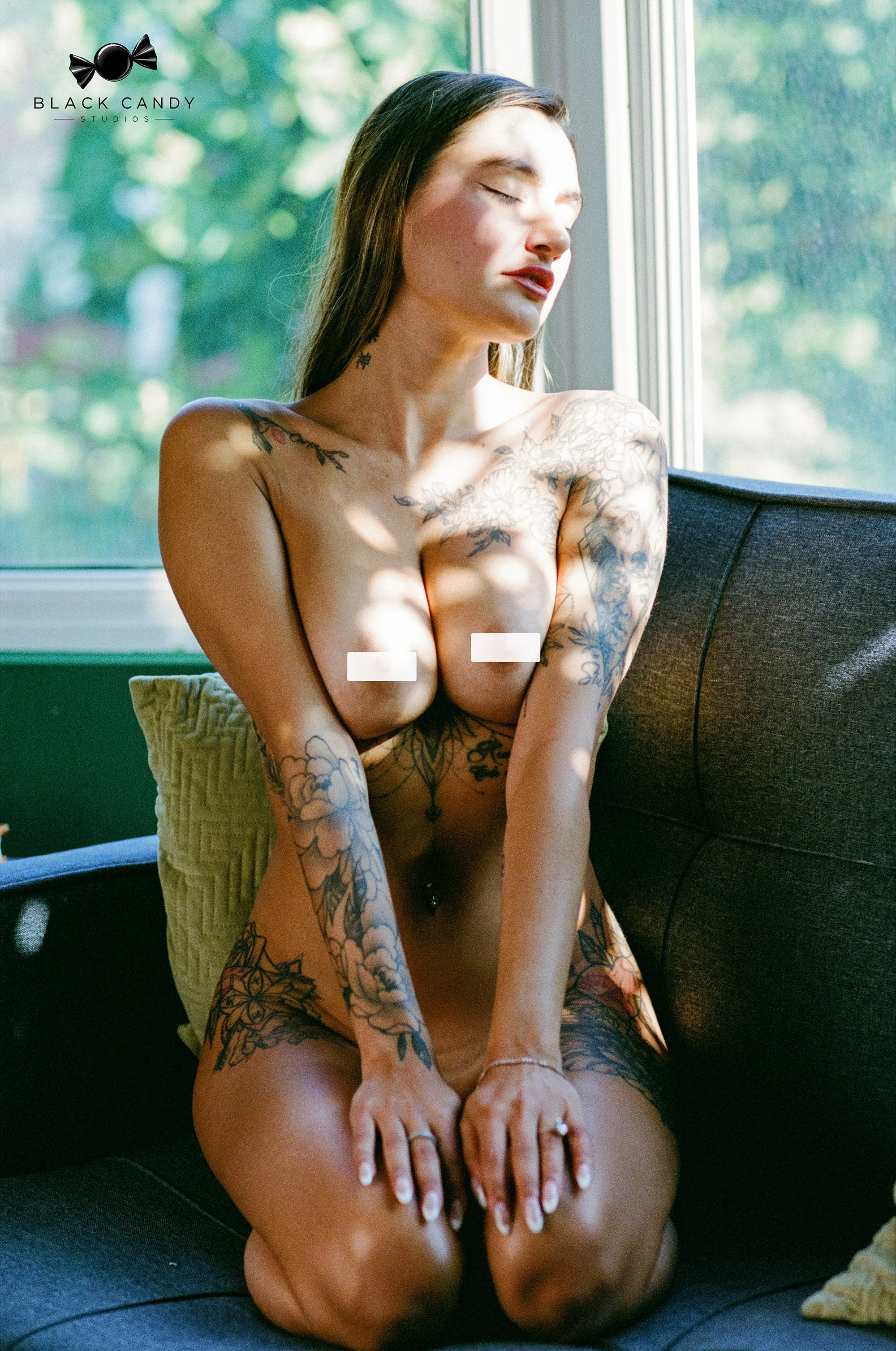
There is something about natural light that I truly love and that I’ve never been able to completely replace with flash.
You can imitate its direction, soften it, warm it, bounce it and control it, but sunlight has its own personality. It changes from minute to minute. It moves across a room, disappears behind a cloud, catches the edge of a face and then, a few moments later, it’s gone.
For this nude photography session, I wanted to work with that beautiful unpredictability.
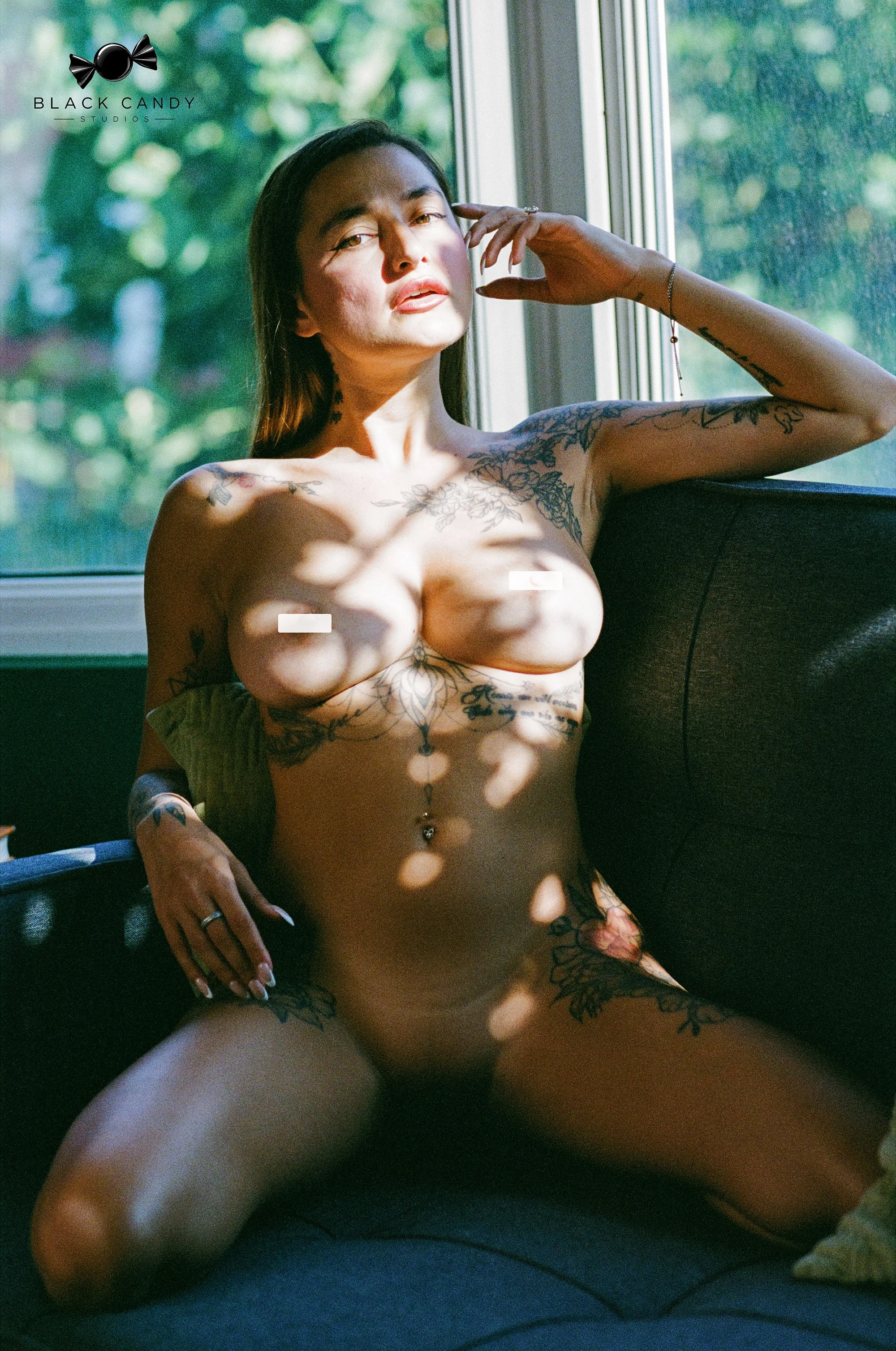
Scouting the Light
Before the shoot, I scouted the location specifically to understand what the sun was doing.
The room had beautiful windows looking through the surrounding trees, but having a large window doesn’t necessarily mean having beautiful light. What mattered was finding that short period when the angle of the morning sun would make its way through the branches and actually enter the room.
I worked out that the sweet spot was roughly 8:30–10:00 in the morning.
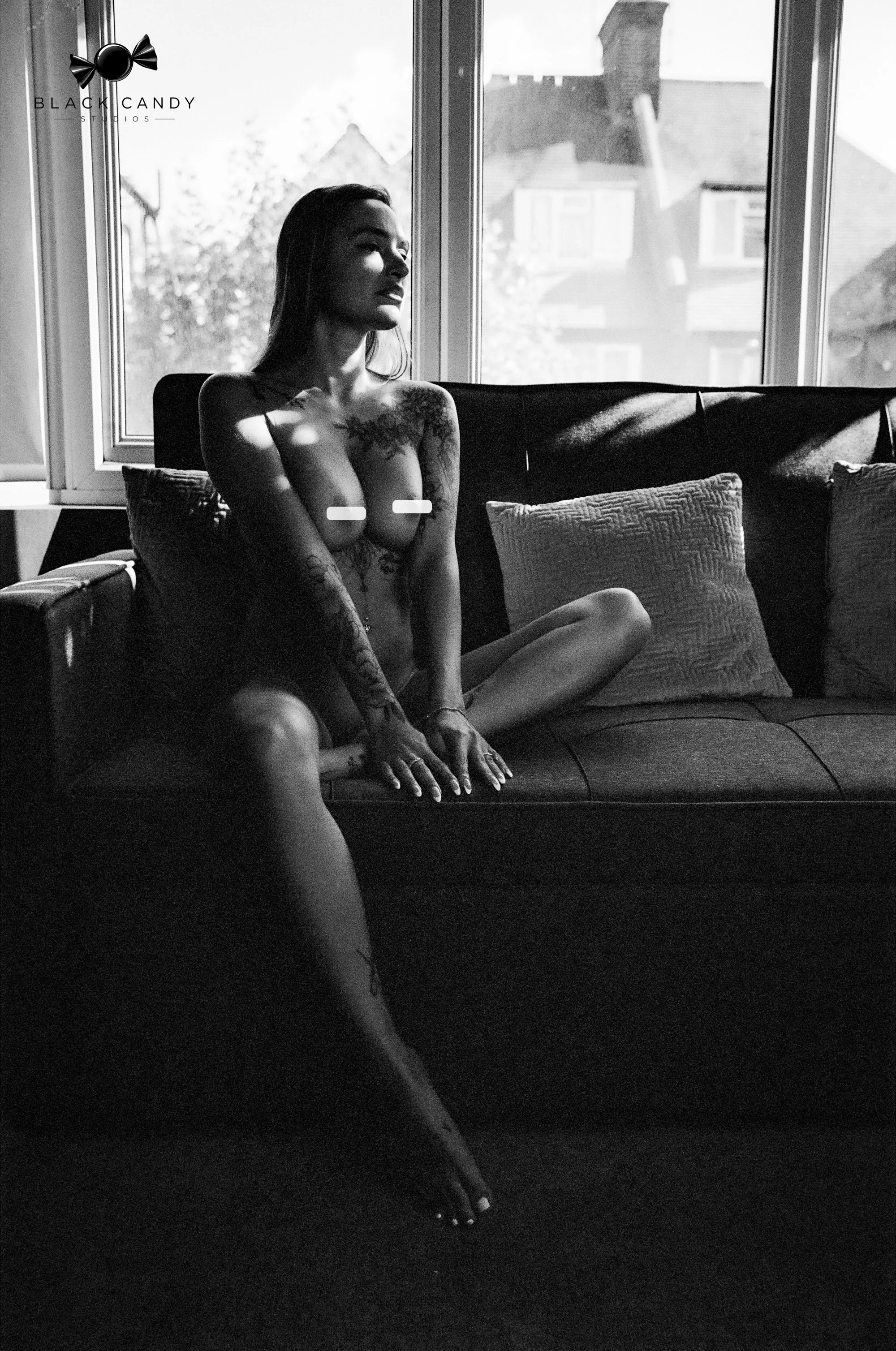
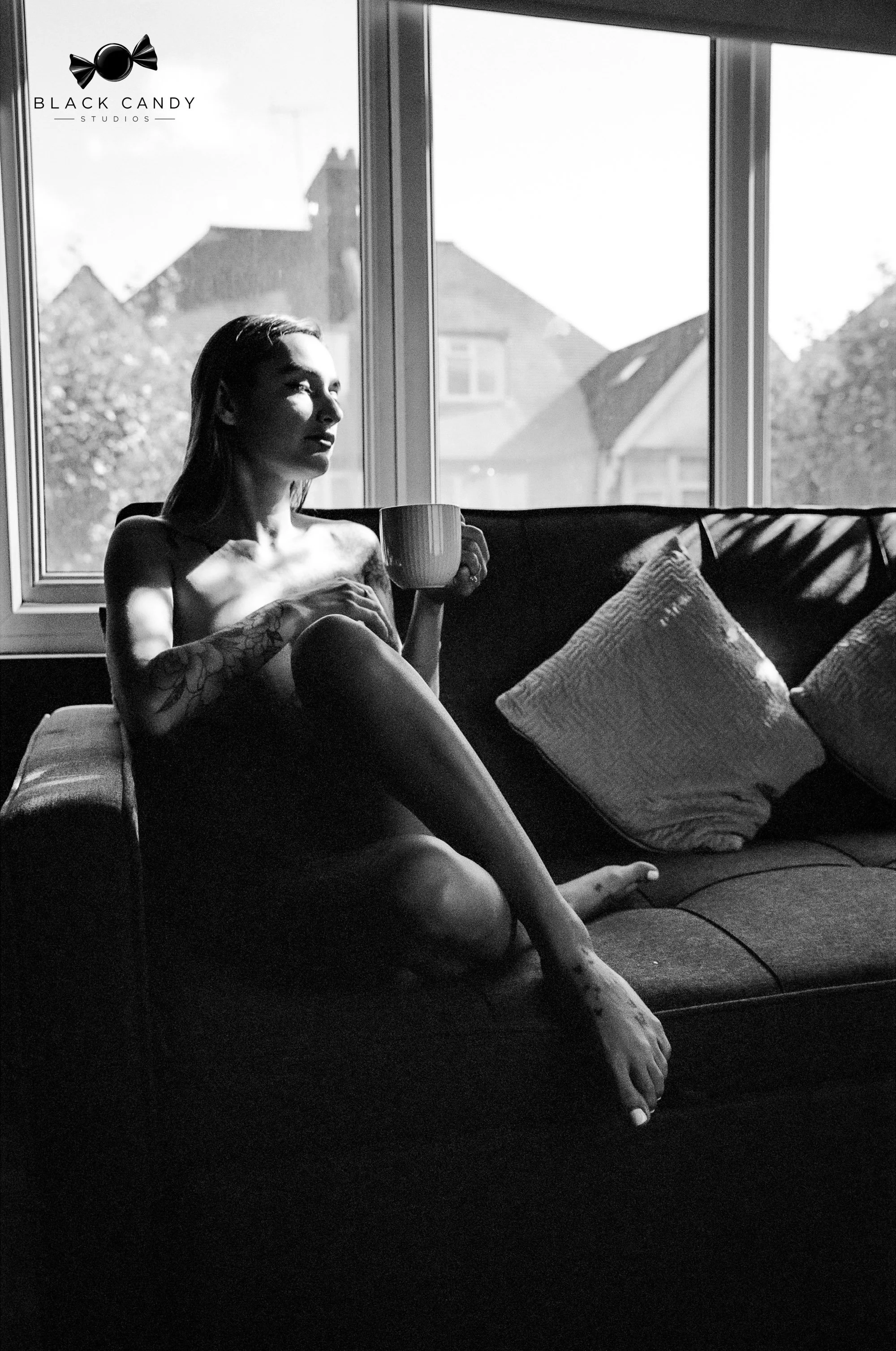
At that time, the sunlight filtered through the trees before reaching the windows, breaking the light into patches of brightness and shadow. Instead of the room being evenly illuminated, the trees were effectively shaping the light for me. That was exactly what I wanted.
I love light that has imperfections. Light that falls across only part of the body. Light that creates deep shadows and leaves something for the imagination. With nude photography especially, I find that what the light chooses not to reveal can be every bit as important as what it illuminates.
A Little Help With the Shadows
Although the sunlight was the main character, I didn’t leave everything entirely to nature.
I used an Aputure Amaran 300c with a large 120cm octabox to gently fill the shadow side of the model. The important word here is gently.
I didn’t want the artificial light to announce itself. The idea wasn’t to flatten the beautiful contrast I had gone to the trouble of scouting in the first place. I simply wanted to bring a little detail back into the deeper shadows and give the film something more to work with.
The 120cm octabox gave me a large, soft source that wrapped around the body beautifully. I kept it sympathetic to the existing window light, using it more like a painter might add a small amount of colour to an area of a canvas rather than trying to repaint the whole picture.
For me, this is where artificial light becomes most interesting, not when you can immediately see that a photograph has been lit, but when you're not quite sure where the natural light ends and my light begins.
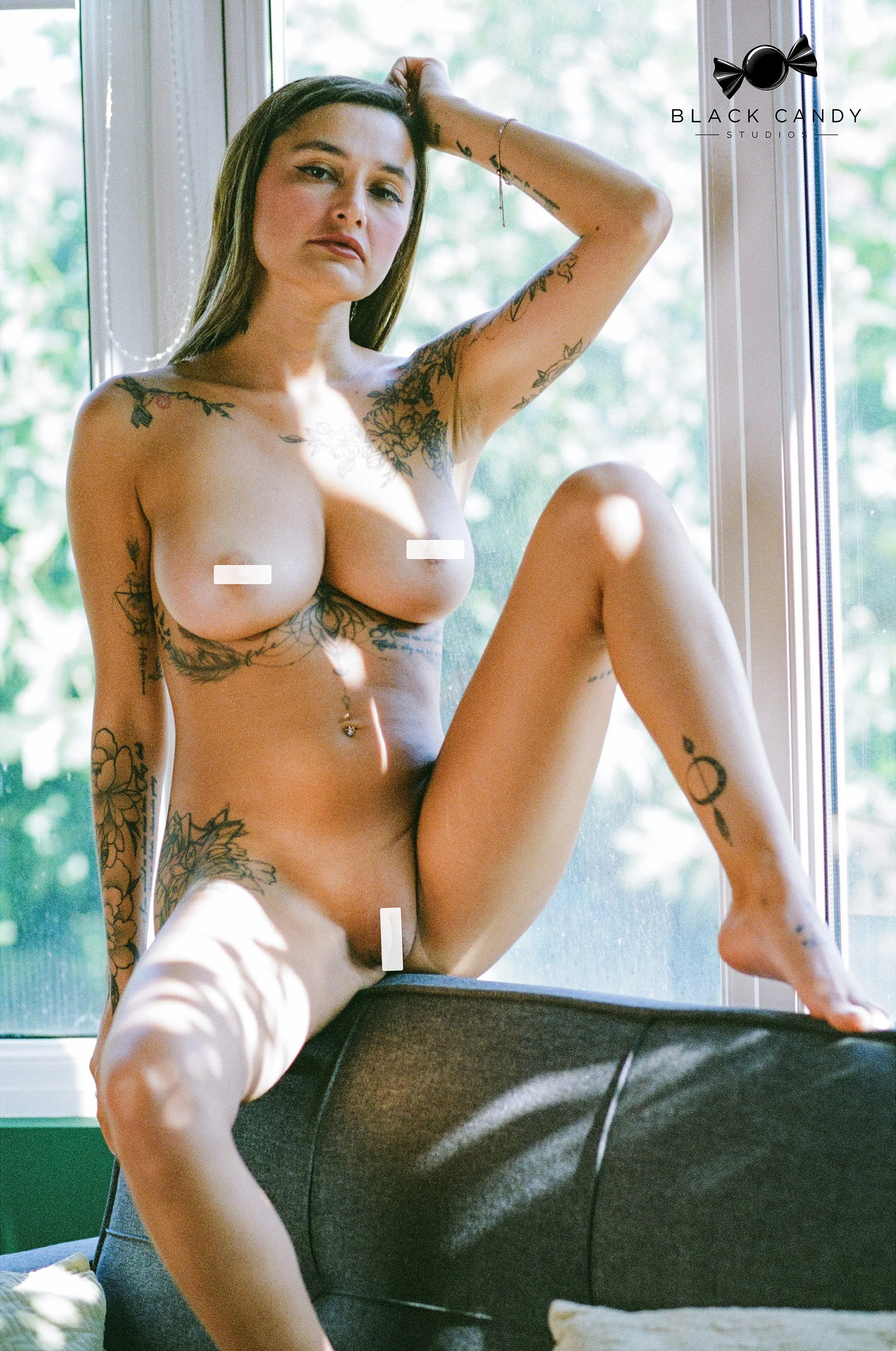
Keeping the Set Simple
The setup itself was deliberately uncomplicated. A simple sofa, a small side table and a few books. That was essentially it.
I didn’t want to construct an elaborate set because the room already had everything I needed. The sofa gave the model somewhere natural to sit, recline and move without the photographs feeling overly posed. The books on the side table added a little sense of everyday life as though we had simply wandered into a quiet room one morning and happened to make photographs there. I like that balance between intimacy and normality.
The nude figure doesn’t always need an exotic location or dramatic styling. Sometimes an ordinary interior makes the photograph more interesting. The contrast between the everyday surroundings and the beauty of the human form creates its own tension.
And, of course, having a beautiful model who understood the mood I was trying to create made the simplicity work. Rather than forcing poses, we could concentrate on small movements, gestures and the relationship between her body and the changing light.
My Beloved Canon EOS-1N
For the shoot I used my beloved Canon EOS-1N, paired with the Canon EF 85mm f/1.2L II. Why? At portrait distance, backgrounds disappear without completely losing their character, while skin and little fragments of the scene seem to emerge from the softness.
With an 85mm, I also have to give the model some physical space. I’m not standing right on top of her with a wide lens. That distance changes the atmosphere of a nude shoot. It allows the model room to exist within the scene while I observe and wait for things to happen.
I shot the session across three films: Kodak Portra 400, Kodak Portra 800 and Ilford HP5 Plus. Portra 400 is one of those films I keep coming back to. There is something wonderfully restrained about it, beautiful skin tones, gentle colour and enough latitude to deal with the difference between bright window light and the shadows deeper inside a room.
Portra 800 gave me a little more freedom as the light changed, particularly when the sun disappeared momentarily behind the trees.
And then there was HP5. Black and white changes the way I look at a scene. Colour makes me notice the room, the furniture, skin tones and the warmth of the morning. With HP5, much of that disappears. Suddenly I’m looking at shape, grain, highlights, shadows and the geometry of the body. The same scene becomes something completely different.
That is one of the reasons I enjoy carrying both colour and bw film. I’m not simply recording the same photograph in two different formats. I start seeing differently depending on what is loaded in the camera.
Painting With Light
Despite bringing a 300c and a rather enormous octabox into the room, this was still very much a natural-light shoot in spirit. The sun established the photograph. I simply helped it along.
There was no complicated lighting diagram and no attempt to make every frame perfectly consistent. The morning sunlight came through the trees, moved across the windows and gradually changed the room. My job was to watch it, position the model within it and use the octabox just enough to control what happened in the shadows.
Sometimes a patch of sunlight would move across the sofa. The model would turn slightly. The light would catch her shoulder while the rest of her body fell away into shadow. You focus. You press the shutter. And then the light moves on.
That is probably what I enjoy most about photographing the nude figure on film. There is an element of surrender involved. I can scout the location, choose the time, select the lens, load the film, position the fill light and create the environment, but I can’t completely control what happens.
Nor do I want to.
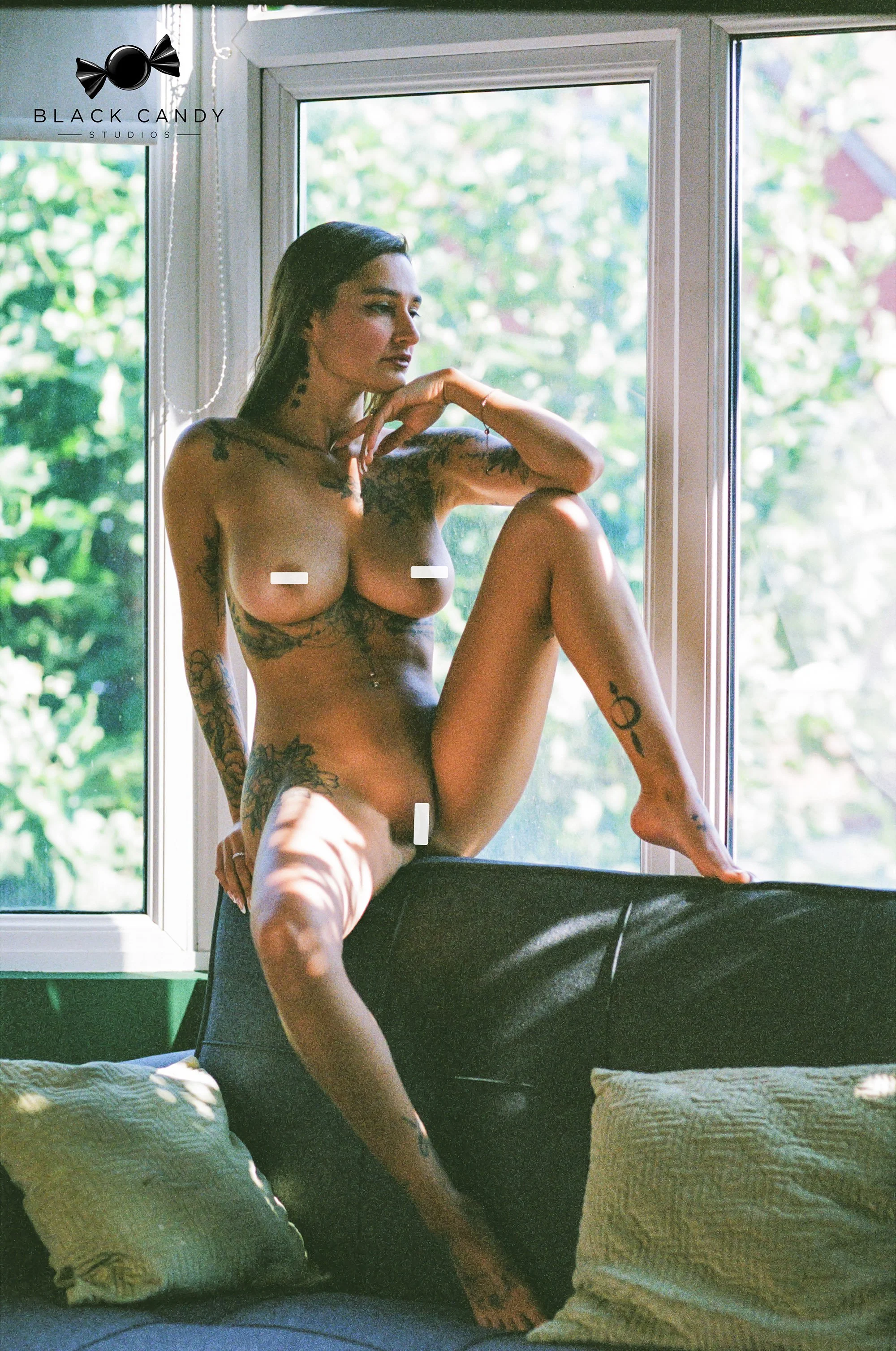
Sometimes photography is less about manufacturing an image and more about putting yourself in the right place, with the right person, at the right time and then knowing when to interfere and when to leave things alone.
The sun does most of the painting.
I just add a few brushstrokes…