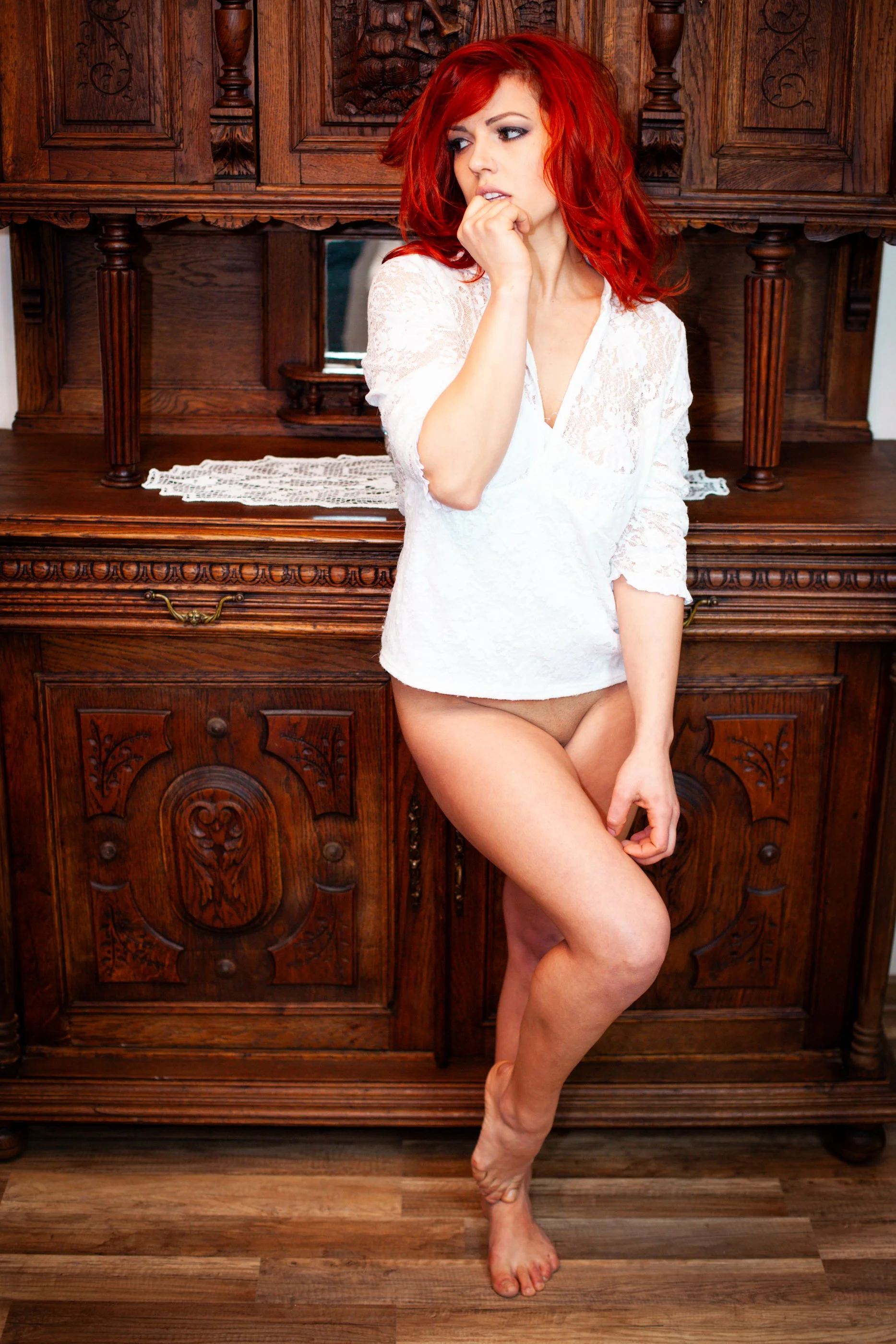
Forget the Whole Body: Why I Love Getting Close with an 85mm Lens
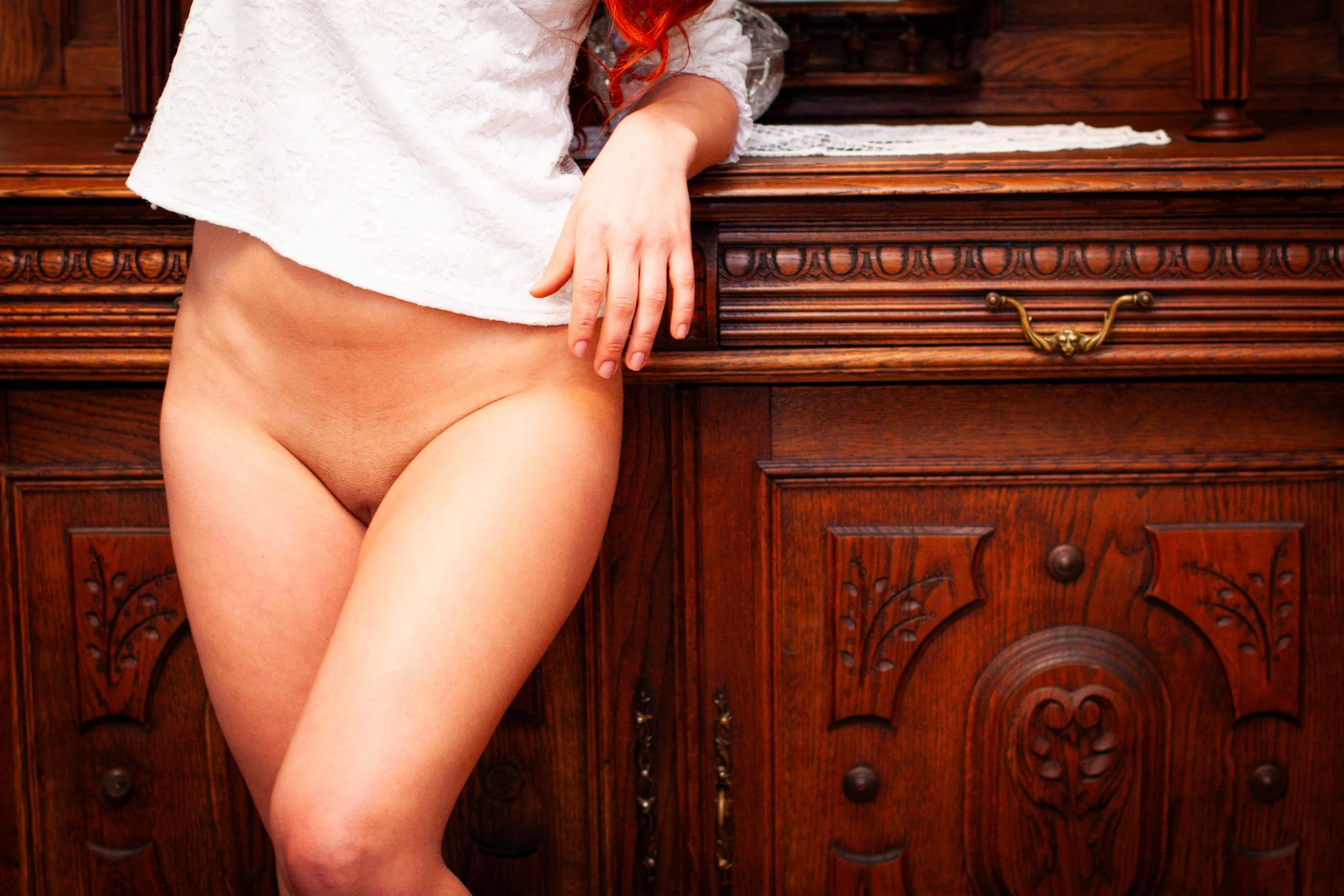
There seems to be an unwritten rule in nude photography that if you have a beautiful model in front of you, you should somehow manage to fit all of them into the photograph. Head, hands, feet, everything neatly accounted for. I disagree. Sometimes the most interesting thing you can do is attach an 85mm prime, get close and deliberately start losing bits of your subject. And yes, I realise how suspicious that sentence sounds.
The 85mm is normally introduced as a portrait lens. Beautiful compression, flattering perspective, lovely background separation, all the usual photography vocabulary that makes us sound considerably more sophisticated than we actually are while crawling around on the floor looking for an angle. But in nude photography, I think the 85mm becomes something else. It becomes a detail lens for the human form. Instead of thinking, How do I photograph this person?, you start thinking about shape, line, texture and geometry. A shoulder becomes a landscape, the curve of a back becomes the entire composition, and hands, neck, hair, knees, hips, shadows and fragments of the body suddenly become photographs in their own right. You stop documenting a pose and start extracting images from it.
Photographers can become strangely nervous about cropping bodies. I've cut off the foot! Good. The elbow is outside the frame! It will survive. I can't see the model's face! Excellent. Now we're getting somewhere. With an 85mm, especially in a relatively small space, you often physically cannot include everything, and rather than treating that as a limitation I like to make it part of the visual language. Crop aggressively. Let the body enter and leave the frame. Allow a shoulder to disappear, photograph half a face, fill the frame with a back, an arm or the relationship between two intersecting shapes. There is no photography police unit waiting outside because you cropped someone's ankle. At least I hope not.
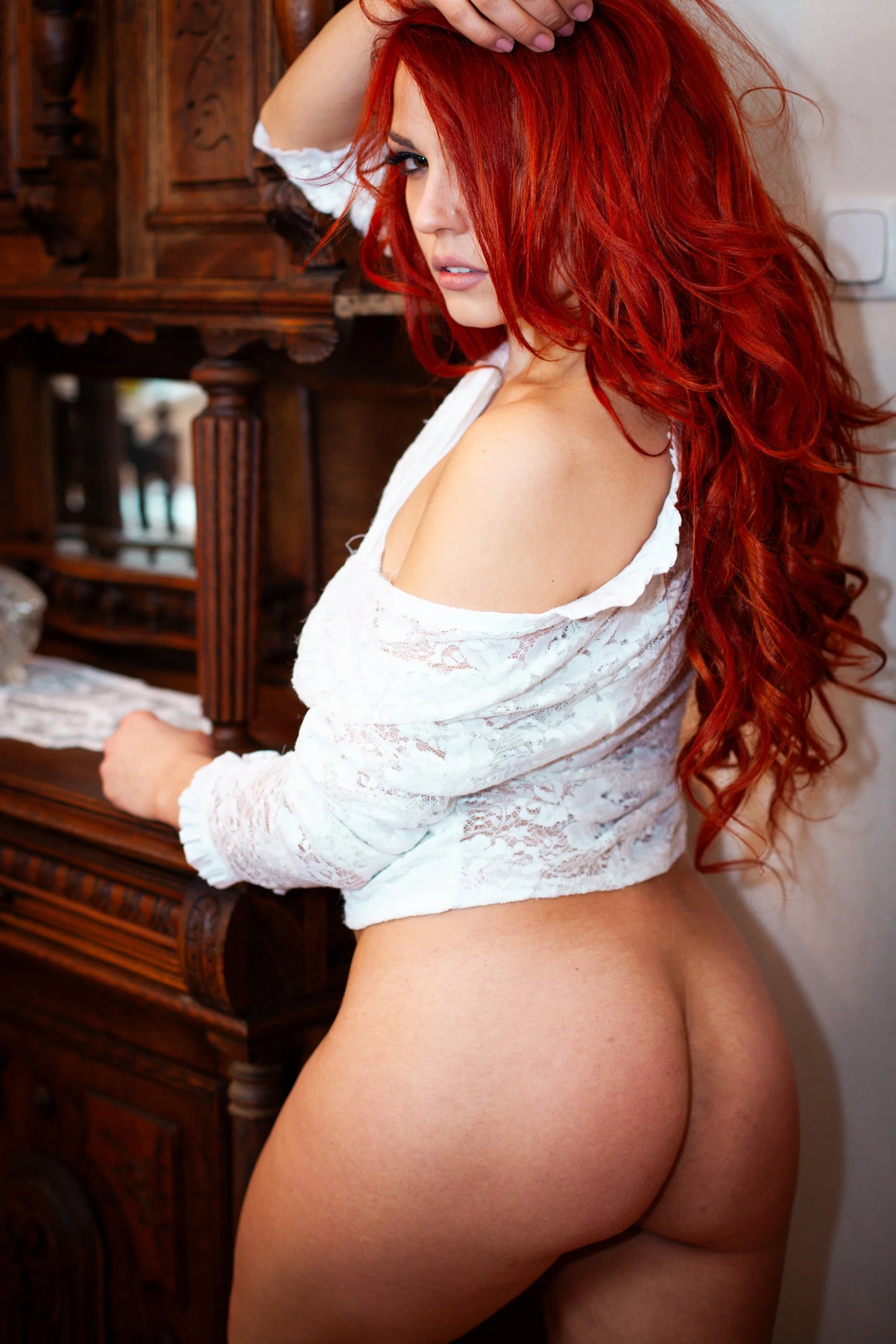
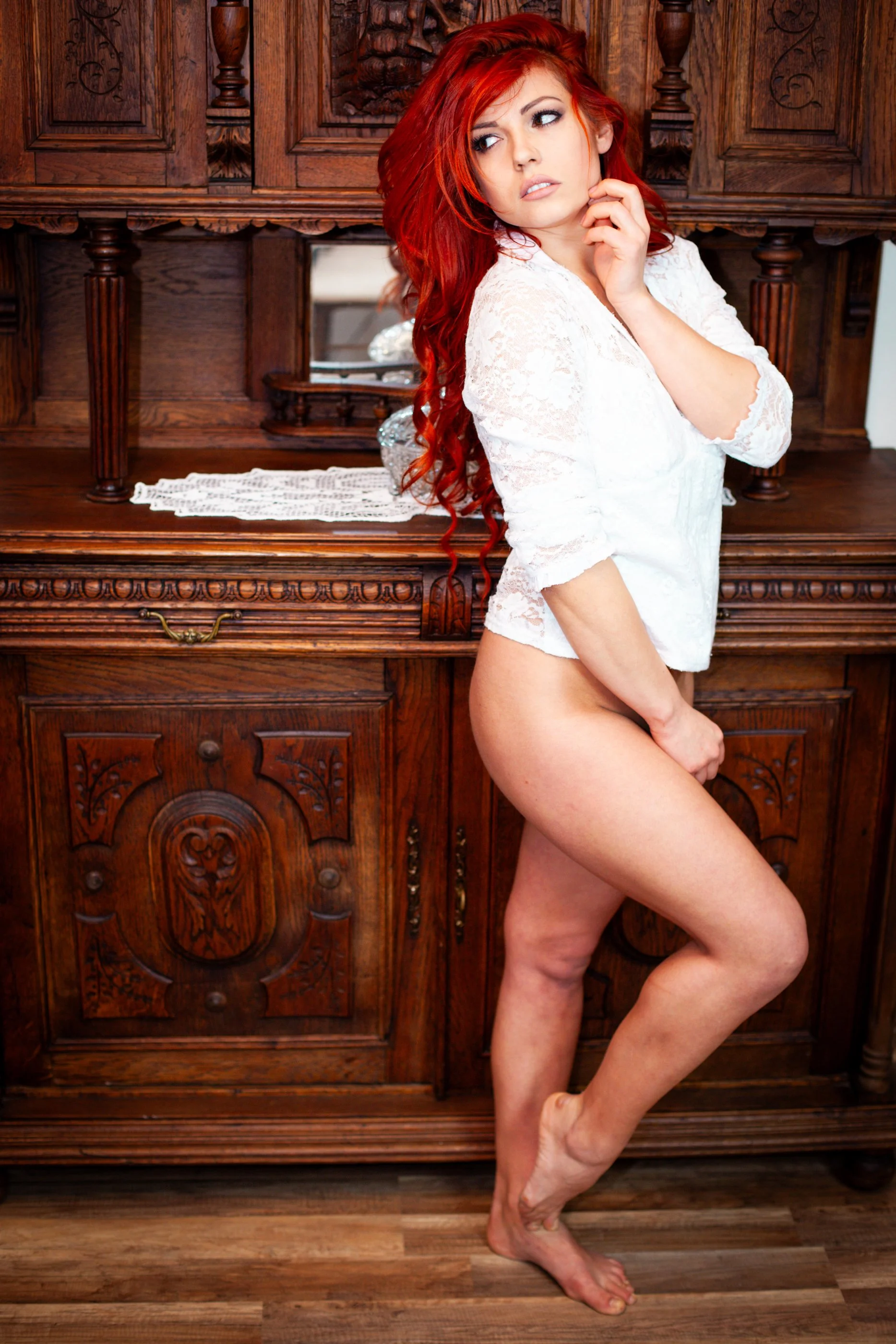
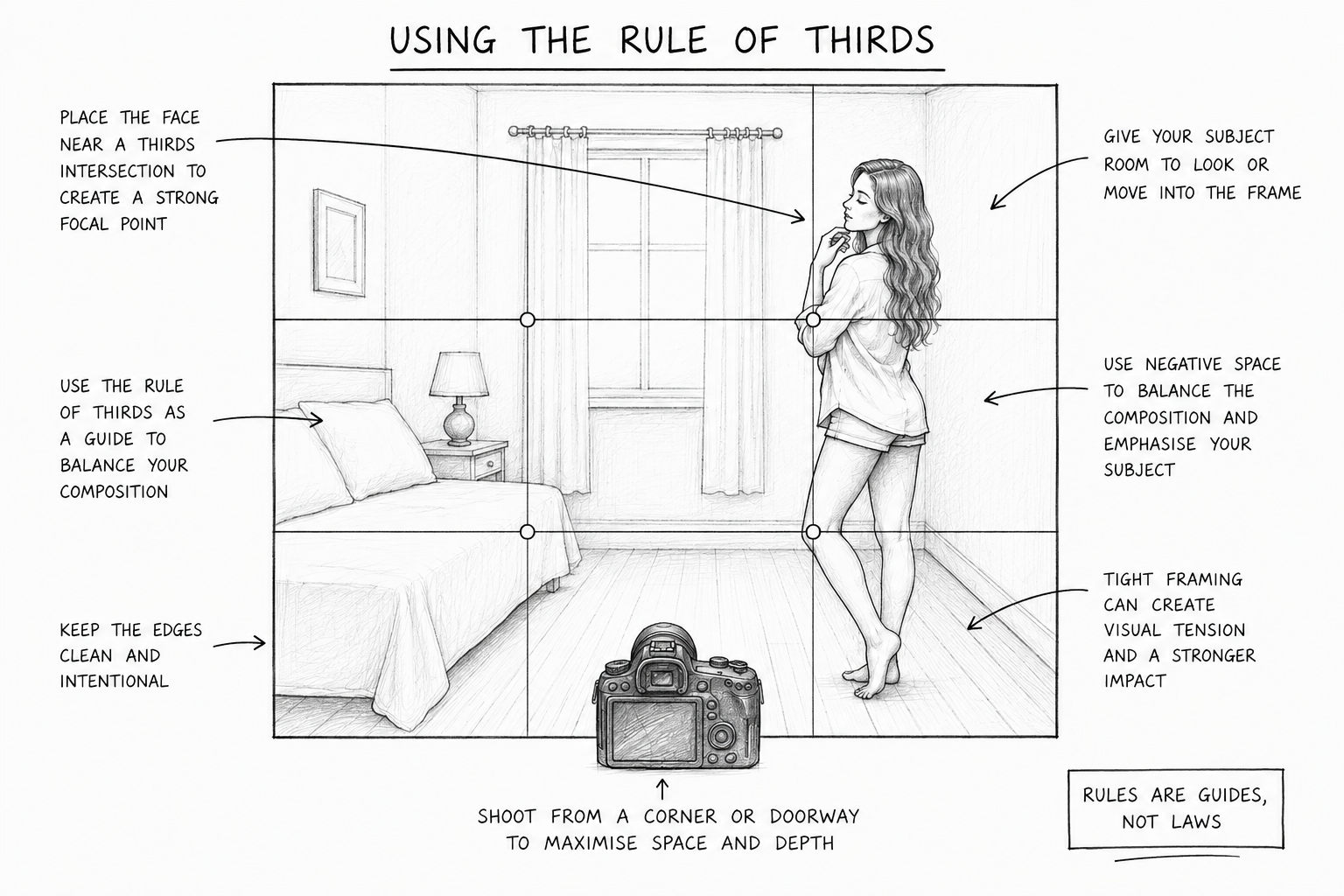
But getting close doesn't mean you have to crop the body. In fact, another approach I really enjoy with the 85mm is squeezing the entire figure into the photograph and deliberately bringing it very close to the edges of the frame. Normally we're taught to leave comfortable breathing room around the subject, but sometimes I don't want comfortable. I want the composition to feel compressed and contained. The head can sit close to the top edge, a foot can approach the bottom corner and an arm can almost escape from the side. The important thing is that it still feels intentional rather than looking as though I simply forgot where the edges of my viewfinder were.
This is where keeping some kind of compositional rule helps. The rule of thirds is an obvious one. Even when the whole body is tightly contained within the frame, I can position the face, torso, hips or another important visual element around those thirds. The model might run diagonally through the frame while the face sits near an upper intersection, or the body might occupy two-thirds of the image with negative space taking the remaining third. You don't have to become a slave to the grid photography has enough rules already—but having some underlying structure means you can push the model extremely close to the frame edges without the photograph feeling accidental. Break the comfortable spacing, but keep the composition.
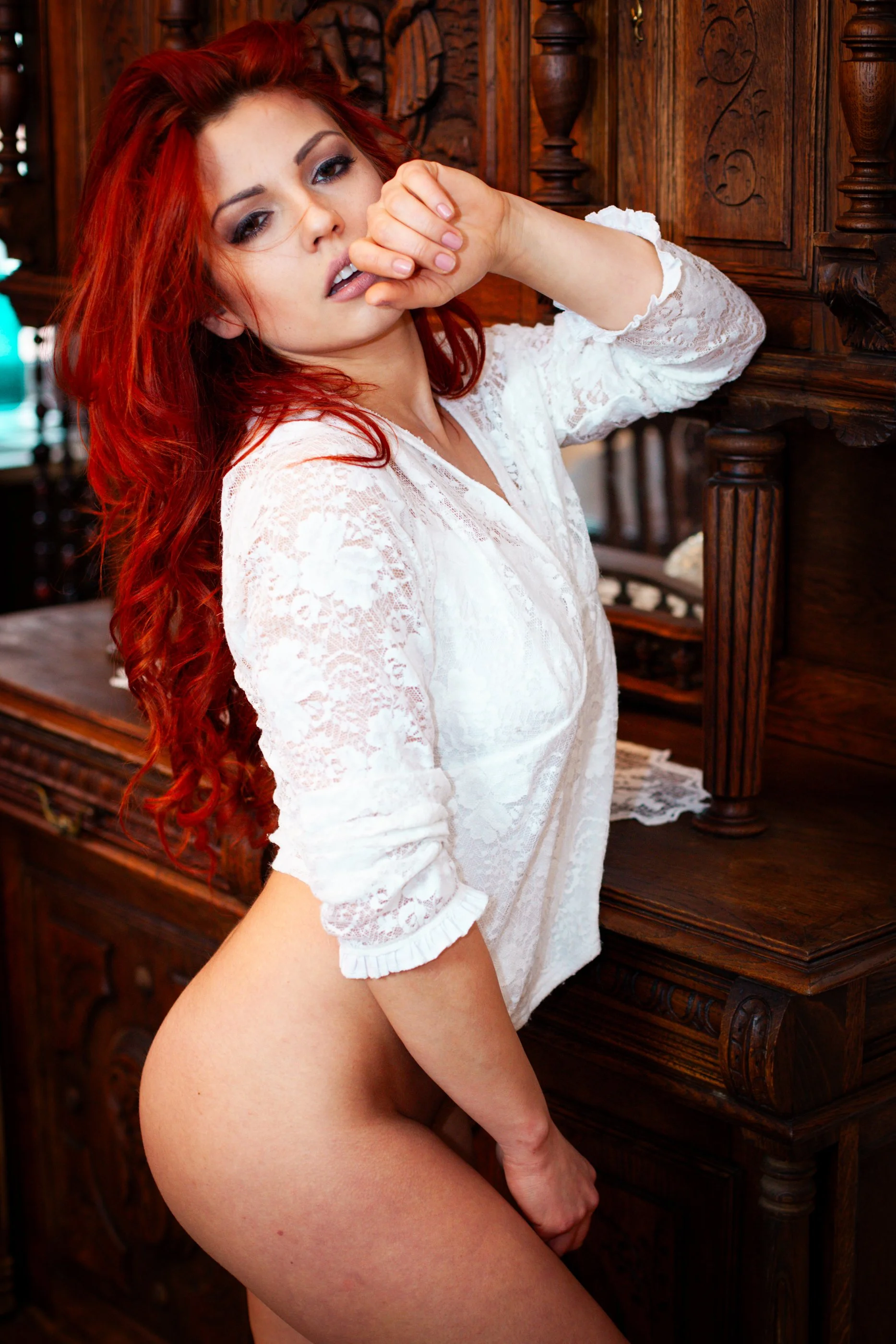
One of the reasons I enjoy an 85mm so much is the way it renders perspective. With wider lenses, especially when working close, whatever is nearest the camera can become exaggerated. Sometimes that's exactly what I want, but an 85mm gives me something very different. It feels calmer, more compressed and more graphic. This becomes particularly interesting when the model is curled up, leaning forward, sitting on a chair or creating overlapping shapes with arms and legs. Those layers seem to stack together. Suddenly you're not photographing a person sitting on a chair. You're photographing triangles, curves, negative space, skin, shadow and light. The chair itself may only appear as one mysterious wooden line entering the corner of the frame. Perfect. The viewer doesn't need an architectural survey of the room.
This is also why the 85mm is brilliant when your location isn't exactly Versailles. Maybe you've got a small room, one chair, a wall, a window and approximately seventeen centimetres between yourself and a wardrobe. Welcome to glamour. A longer focal length allows you to exclude enormous amounts of visual rubbish. You don't need the entire room to work; you only need a tiny section of it. A plain wall can become a studio background, a window can become your entire lighting setup and one interesting chair can provide enough posing possibilities for half a shoot. Rather than constantly changing locations, props, outfits and lighting setups, I can keep the model in roughly the same place and change my own position. Higher, lower, closer, slightly to the side, shooting through hair, across a shoulder or from behind. Move twenty centimetres and suddenly it is a completely different photograph.
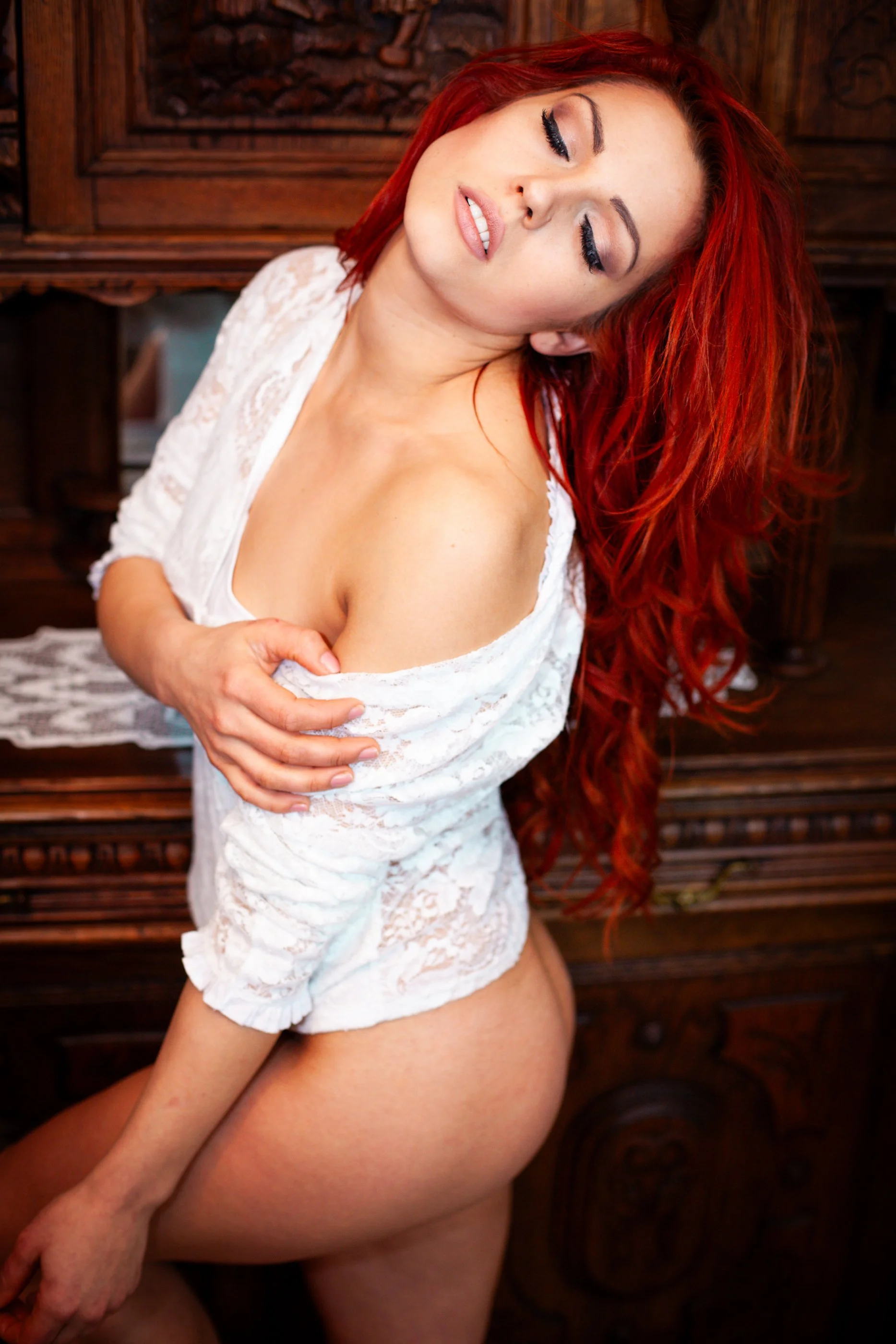
Close framing also changes the emotional character of nude photography. A full-body photograph often tells us about the pose and the environment, while a tightly framed photograph asks us to notice something smaller: a gesture, a hand resting against skin, the direction of the face, tension in a shoulder, the shape created by crossed legs or the tiny area of shadow where two forms overlap. It can feel intimate without needing to be provocative. In fact, some of my favourite close photographs are interesting precisely because they reveal less. That's the wonderful contradiction of working this way: you move closer but show less, and because you show less, the viewer has to imagine what exists beyond the frame.
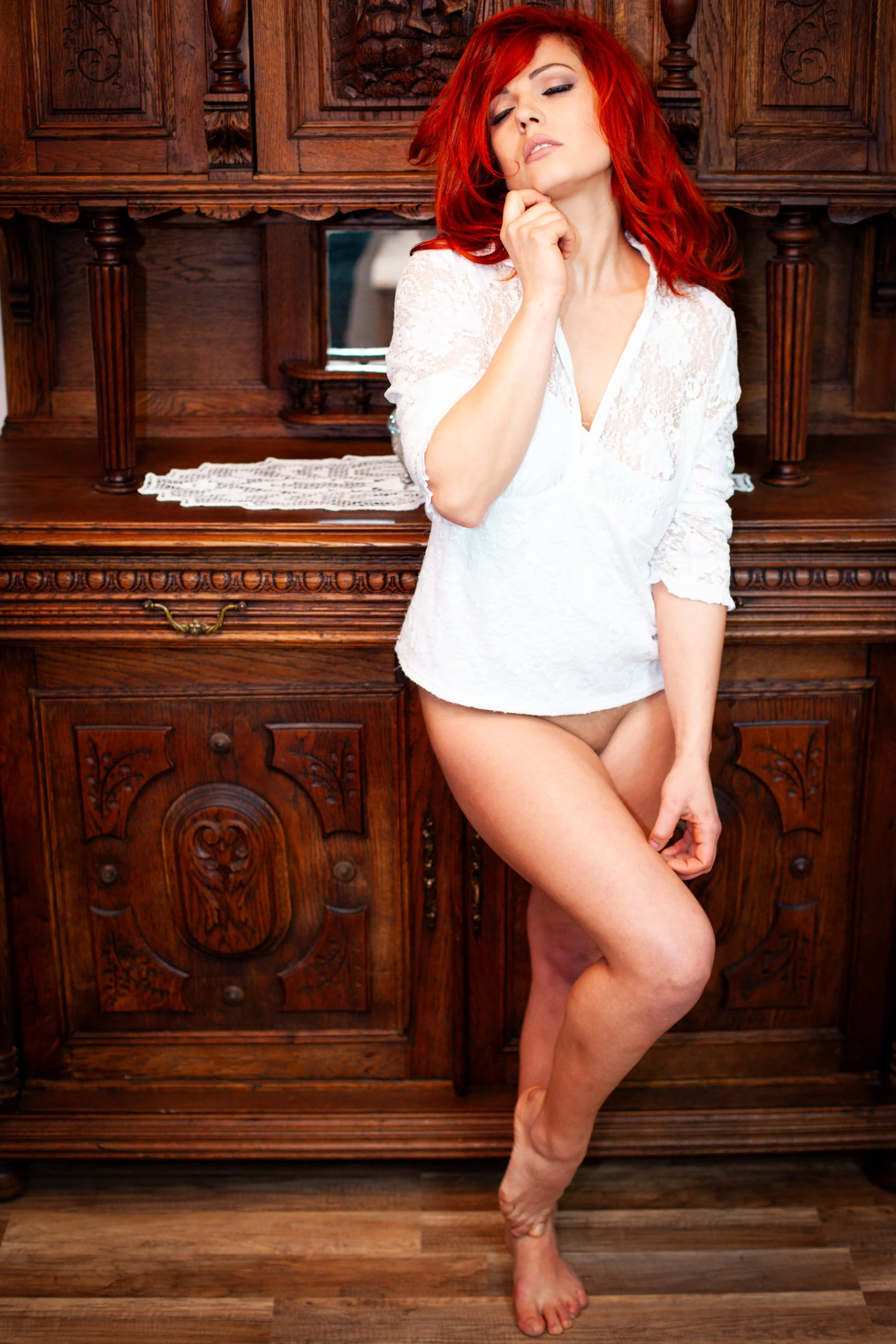
Then there is the obvious 85mm advantage: backgrounds have a habit of politely leaving the conversation. You don't necessarily need to shoot everything at f/1.2 until one eyelash is sharp and the rest of the photograph resembles soup, but a relatively wide aperture combined with the longer focal length and close working distance can give wonderful separation. The background softens, distractions disappear and attention goes exactly where you want it. A shoulder may be perfectly defined while the rest of the body gradually falls away. Hair becomes texture rather than information. The edge of a chair dissolves into the background. You're controlling not only what is inside the frame, but how much information within that frame the viewer is allowed to inspect.
Perhaps the biggest change is that I start thinking less about traditional posing and more about constructing the frame. Where does this curve begin? Where should it leave the photograph? Do I actually need the face? Can an arm create a diagonal? Can I place the eyes on the upper third while allowing the rest of the figure to stretch almost uncomfortably towards the opposite corner? What happens if I move closer again? Once you start seeing the human body as a collection of shapes rather than something that must always be completely represented, you suddenly discover dozens of photographs inside a single pose.
A good exercise is to put the model in one comfortable position and resist the temptation to immediately change it. Instead, make ten genuinely different photographs. Start with the whole figure pushed close to the frame edges, then move in. Make a three quarter composition, then face and shoulder, hands, back, profile, a small detail, something almost abstract, a high angle and a low angle. Work horizontally and vertically. Suddenly one pose has become an entire sequence. This is something digital photography can make us forget: there is a difference between taking a lot of photographs and actually finding photographs. Pose, click-click-click, next pose, click-click-click, next outfit and congratulations, you've taken 900 pictures and somehow made four photographs (not that you would do that when shooting film anyway).
There is, of course, one minor technical difficulty with using an 85mm indoors: walls. An 85mm requires working distance, and small rooms have an annoying tendency to end. There will inevitably be a moment when you look through the viewfinder, think, I just need another half metre, step backwards and discover that architecture has other plans. This is why nude photography with an 85mm occasionally involves photographing while pressed against a wall like you're being questioned by the police. But I actually enjoy that constraint. If I can't step backwards, I don't automatically change lenses. I change the photograph. Closer it is. Forget the legs. Forget the chair. Forget half the body. What's left? Sometimes what's left is much better.
That, for me, is the real appeal of getting close with an 85mm. It forces you to stop thinking that a successful nude photograph needs to explain everything. Sometimes I want only a fragment of the body; other times I want the entire figure compressed tightly against the boundaries of the photograph, balanced by something as simple as the rule of thirds. Both approaches create tension, intimacy and a sense that the frame itself is actively participating in the composition. The 85mm encourages me to simplify, crop, compress and isolate. More importantly, it reminds me that getting closer isn't necessarily about showing more. Quite often, it's about deciding exactly what deserves to remain inside those four edges and having absolutely no sympathy for the occasional missing foot.